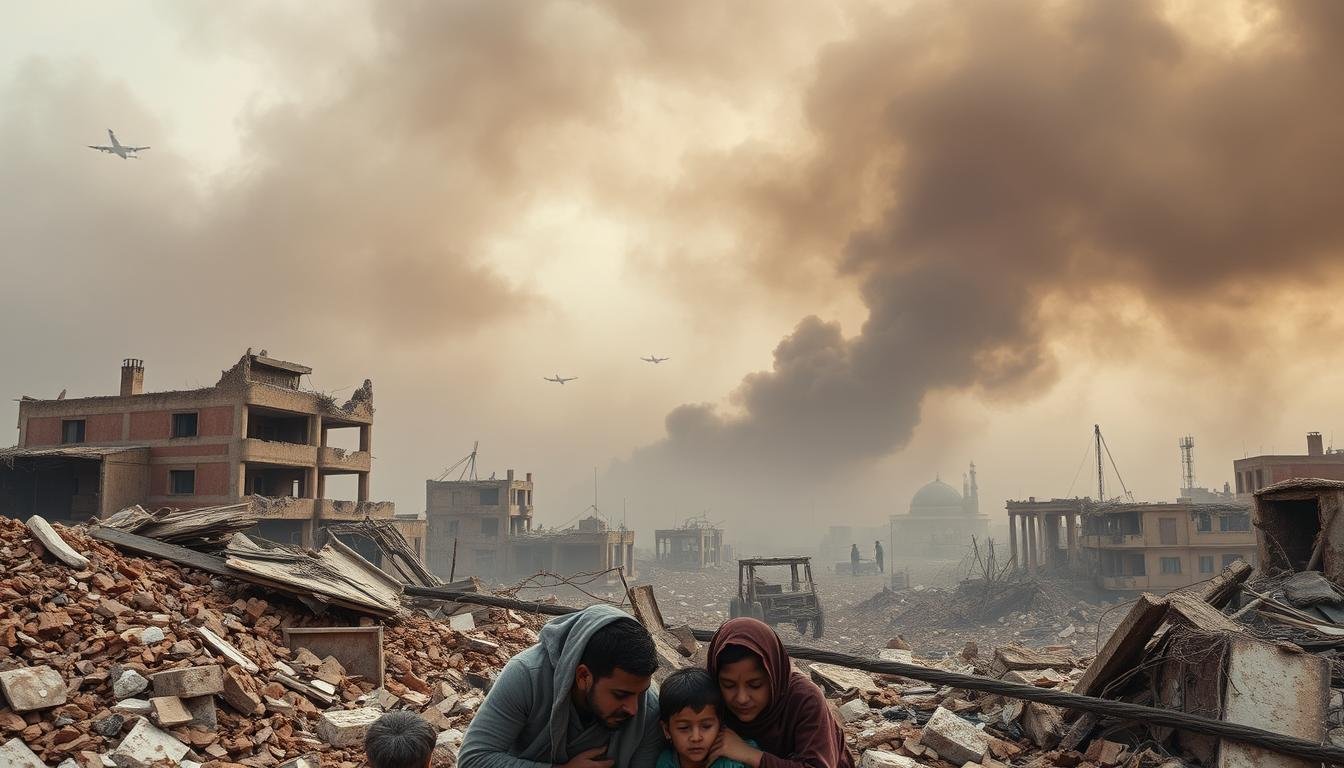
Could the *biblical conflicts* of ancient times be echoing in today’s warfare in Gaza? We see the terrible impact of Israeli airstrikes and think about how old stories and today’s events are linked. These airstrikes, triggered by violence from Hamas, have turned Gaza into a place of sadness and loss. Around 26,000 Gazans have died, and many were not involved in the fight, like women and kids.
Nearly 2 million people have had to leave their homes. Their lives and hopes are ruined. This *Gaza conflict*, tied to *biblical prophecy*, makes us question our part in these stories. As bombs keep falling, the reality gets darker—the humanitarian crisis gets worse. It shows how much we need compassion in conflicts. The big question is, can we stop the cycle of violence that feels like it’s from history books?
Key Takeaways
- Approximately 26,000 Gazans have been reported killed, predominantly women and children.
- Nearly 2 million people have been displaced due to the ongoing conflict.
- Over 11,000 civilian casualties reported in Gaza as of now, with around 4,500 being children.
- Historical tensions complicate the discussion surrounding Western antisemitism and the conflict.
- The humanitarian crisis worsens, with food and medical supplies becoming increasingly scarce.
- Four organizations, including Christian Aid, have signed an open letter urging peace from the UK government.
Overview of the Latest Conflict Escalation
The Middle East is facing a sharp rise in conflict that is capturing worldwide attention. Recent Israeli airstrikes have shattered a shaky peace, leading to tragic outcomes. Reports from last night confirm the sad loss of at least 58 civilians.
The fighting has opened a new, painful chapter in the history of this long-standing conflict. Thousands find themselves in harm’s way due to the ongoing battles. Currently, over 1.9 million Palestinians have had to leave their homes, searching for safety in a world filled with uncertainty.
Humanitarian organizations are urgently calling for action as the situation worsens. They want peace talks to start, hoping to prevent more loss of life. Everyone is hoping for a break in the violence, longing for a time of peace and healing.
The Impact of Israeli Airstrikes on Gaza’s Civilian Population
The ongoing conflict has hit Gaza’s civilians hard with non-stop airstrikes. It’s like the terrors of ancient plagues have come to life, hurting countless innocent lives. Since October 7, over 10,569 Palestinians, including more than 4,000 children, have died. With bombings everywhere, families are shattered and entire communities lie in ruins.
Statistics from Recent Airstrikes
The numbers show deep destruction:
- 30,000 tonnes of explosives have been dropped in just a month.
- Approximately 50% of housing units in Gaza are damaged, with 10% deemed uninhabitable.
- Nearly 70% of Gaza’s population, totaling around 2.3 million, has been forcibly displaced.
- 50% of hospitals and 62% of primary care health centers are out of service.
- One-third of schools have sustained damage, and 9% of these are currently incapable of functioning.
These numbers aren’t just stats; they mark lives turned upside down, dreams crushed, and futures lost.
Accounts from Survivors on the Ground
Hearing from survivors makes the statistics even more real. One woman shared the frightful experience of seeking shelter in the Holy Family Church. With every bomb, the church’s promise of safety turned into despair. Now, displaced families walk through what used to be their neighborhoods, haunted by the ongoing sounds of war.
“We thought we would be safe here, but with every explosion, our hearts sink deeper into despair,” one survivor shared, showing the grim reality for many.
Civilians face the brunt of the airstrikes, suffering greatly. Their stories reveal the true human cost of the conflict. It’s a reminder that in political struggles, ordinary people pay the highest price.
Historical Context of Israeli-Palestinian Tensions
To understand the historical context of the tensions between Israelis and Palestinians, we need to go way back. We’re looking at conflicts that started in biblical times, affecting us even now. Abraham is seen as a key figure in three major religions, and his sons, Isaac and Ishmael, are where the divide begins.
Moving to the 20th century, things got really heated. The 1917 Balfour Declaration and later events led to Israel’s creation in 1948. This change greatly impacted the Palestinians. There have been many wars, uprisings, and attempted peace treaties since then, but few solutions.
The ongoing Israeli-Palestinian tensions show a tragic pattern. These disputes, often rooted in unresolved past issues, continue through modern times. Each period brings new challenges that add to the conflict, making it hard to find a clear solution today.
In the past 76 years, the conflict has resulted in over 37,000 Palestinian casualties. The number of Israeli civilian deaths varies greatly. Despite peace efforts, these deep-rooted conflicts go on, illustrating the complexity of the situation. This story is far from simple, so sit tight.
Humanitarian Crisis: Civilian Casualties in Gaza
The crisis in Gaza is truly heartbreaking for many families. Over 10,569 people have died, most of them civilians. Many are experiencing extreme violence. We must pay attention to the civilian losses and their personal stories.
Current Civilian Death Toll and Injuries
About 60% of those killed in Gaza are civilians. Reports say 1,200 civilians have died in this conflict. Children and women are a large part of these deaths. Horrific acts of violence have occurred, including civilians being burned alive. Even mothers have been shot in front of their kids. The civilian to combatant casualty ratio is as high as 3:1. Child mortality rates have soared, with children making up one in every five victims.
Testimonies of Displaced Families in Gaza
Displaced families in Gaza have shared their painful stories. One account talks about their severe loss and trauma. Over 20,000 homes have been destroyed or damaged. About 1.5 million people have left their homes, which is nearly 75% of Gaza’s population. With limited access to medical care, the crisis worsens. More than half of the hospitals are closed, leaving many without necessary treatment.
Israeli Airstrikes Gaza Conflict Civilian Casualties Biblical Prophecy
The recent rise in the Gaza conflict, especially with more Israeli airstrikes, has led to many civilian casualties. Looking back at the history of this conflict, we see how it connects with biblical prophecy and today’s suffering. Israeli airstrikes highlight the human cost that’s often missed in policy and territory talks.
In light of these events, it’s hard not to think about biblical stories that predicted trouble in this area. These writings describe chaos in the last days, showing Israel facing global challenges alone, much like what is described in Ezekiel. For some, bringing up these prophecies adds depth to the current situation, where the harm to civilians reflects these ancient warnings.
Almost two million people living in Gaza are struggling with leaving their homes and facing violence. The loss of life shows a sad truth, reminding us of prophecies about suffering. Each bomb dropped not only destroys but also brings up past hurts. This marks one of the darkest times for Israel since it was founded in 1948.
Also, there’s a big change in how people in the U.S., especially evangelical Christians, view Israel. This shift, seen as people prepare for the Iowa Republican caucuses, emphasizes the importance of supporting Israel. It shows how ancient writings are still relevant in shaping how we see the world today.
Human Rights Violations During Military Operations
During military operations, human rights issues are a big concern. The chaos affects civilians caught in the middle. Reports show a lack of care for civilian safety, with random attacks often in the news. Even places meant to be safe, like churches, are attacked, raising issues about following international laws.
Groups like Amnesty International share the scary effects of these actions. The impact goes beyond just immediate harm. Families lose their homes and loved ones, suffering in a world filled with conflict. As things get worse, the demand for holding people responsible increases. We’re left wondering: Can we break this cycle to safeguard the vulnerable?
The situation’s complexity grows as tensions rise. It becomes hard to tell fighters from non-fighters, making the consequences of battles even sadder. Recognizing these human rights issues is important for legal reasons and our global moral compass.
International Responses to the Violence
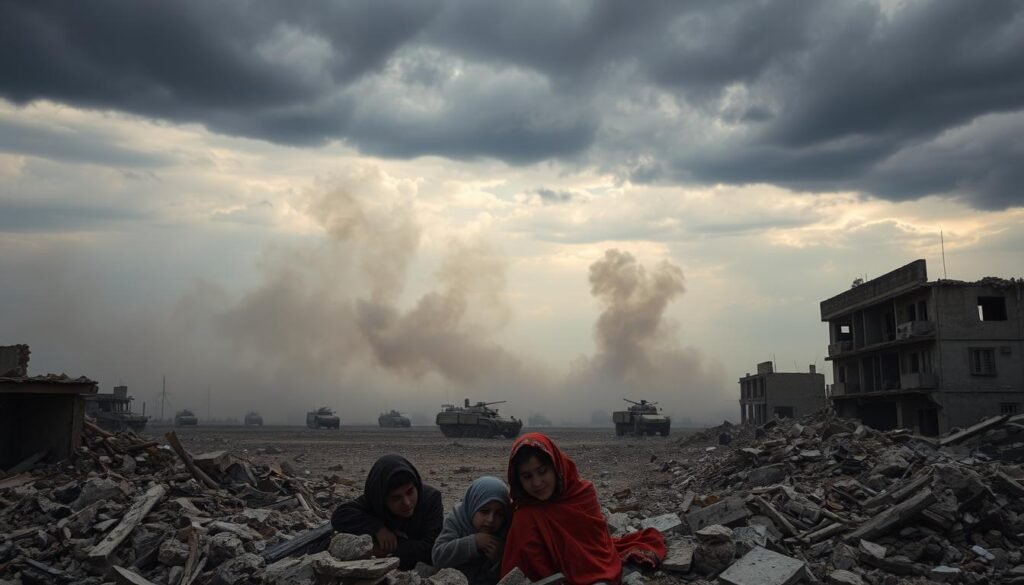
The situation in Gaza is getting worse, and the world is paying more attention. Groups that help people in need are speaking out. They are telling everyone about the terrible effects on regular people. More than 37,000 Palestinians have died since October 7, 2023.
This is a huge number of people who were not fighting in the war. The whole world must act fast to help.
Reactions from Humanitarian Organizations
Groups that help others want to save innocent lives right away. The International Red Cross and UNICEF say we need safe paths for aid. This will help get supplies to people who really need it.
Even those helping have been hurt or killed. For example, an airstrike killed seven aid workers, including three from Britain. This shows how risky it is to bring help where it’s needed.
Calls for Ceasefire and Peace Negotiations
Well-known people around the world are asking for a stop to the fighting. They want both sides to discuss peace. Leaders like Rishi Sunak and President Joe Biden say we need to do more than just talk about the problem.
There’s a growing demand for real steps to be taken. People in many cities are making their opinions heard, with some against a ceasefire. But it’s crucial for everyone to come together and demand peace to end the constant violence. This impacts both Israelis and Palestinians.
Religious Significance of the Conflict
The conflict between Israel and Palestine is deeply rooted in religion, reaching back to stories in the Bible. These stories show how heritage and faith impact the way people see the conflict today. The mixing of old prophecies with today’s issues shows how history and the present merge in surprising ways.
Biblical Connections to the Modern Struggle
The Bible mentions Gaza 20 times, showing its importance in history and religion. In Genesis 10, Gaza is part of the land of the Canaanites. The Book of Judges tells us how the tribe of Judah conquered Gaza, making it a key part of Israel’s early history.
Jeremiah 47 talks about Gaza being taken over by an Egyptian Pharaoh, showing the region’s complex past. The prophet Amos talks about God’s judgment on Gaza for its past wrongs. Zephaniah and Zechariah predict Gaza’s downfall and changes in leadership, showing how Gaza is viewed in the Bible.
| Biblical Reference | Significance |
|---|---|
| Genesis 10 | Gaza as part of the Canaanite territory |
| Judges | Conquest by the tribe of Judah |
| Jeremiah 47 | Conquest by Egyptian Pharaoh |
| Amos | Divine judgment against Gaza |
| Zephaniah 2:4 | Prophecy of Gaza’s abandonment |
| Zechariah 9:5 | Change in Gaza’s leadership |
How Faith Influences Perceptions of the Conflict
Religious beliefs shape how people see the conflict, touching hearts with tales from the Bible. When people see the ongoing struggles, they feel a connection to biblical stories, sensing destiny or divine will. This can lead to very different views, with some focusing on ancient prophecies and others on the pain and displacement happening now.
Descriptions such as a “graveyard for thousands of children” highlight the tragedy and also link to spiritual meanings. This mixing of faith and politics adds to the conflict, making us wonder how biblical stories feed into people’s actions and thoughts today.
Witness Accounts: Life in Gaza During Airstrikes
The chaos of airstrikes brings profound stories from Gaza. Those living through it share their experiences, bringing light to war’s true cost. Their stories of survival show personal pain but also immense strength.
Personal Stories of Loss and Resilience
Gaza’s residents face new struggles daily. They navigate their shattered lives, sharing moments that make you cry and smile. Their stories reveal the harsh reality of living without basic needs like water and electricity, putting many in tough spots.
A mother rushes to find safety as bombs fall. The destruction of her home shows how unpredictable life is under attack. Yet, these tales also showcase strong hope and will to keep going.
An older man rebuilds his house with what remains, showing incredible resilience. These stories of survival under threat inspire us all.
People’s fear and bravery mix as they seek safety among danger. Their stories tell of deep trauma but also never-ending hope during airstrikes.
The narratives of loss and courage stand out in each account. They show how people strive for normality amidst sorrow. These stories remind us of the enduring strength and pride in Gaza’s residents.
The Role of Media in Covering the Conflict
The media has a big job in shaping what people think during conflicts. In the Israeli-Palestinian tensions, media’s role shows how complex storytelling can be. Different stories often clash, making things more confusing. This makes fair media coverage very important.
In Kfar Aza, close to the Gaza border, tragedy struck. About 90 people, or 10%, were killed or taken on October 7, 2023. These numbers show the human cost and the stories media decides to share.
The recent violence is said to be the worst day for Jews since the Holocaust. This shows the deep historical context in the narrative. On the other hand, reports say over 25,000 lives were lost in Gaza. These figures show a part of the bigger picture that media needs to fully cover.
Media’s work can change views and policies worldwide, pushing for peace or more conflict. Lately, stories aren’t just about the human loss but also the dangers journalists face. Since October 7, around 95 journalists have died, making it a deadly time for reporters.
Reporting on conflicts is tough. Reporters must balance different views and histories, making sure to include all sides. Often, not doing this well can create more division. This highlights how critical good storytelling is in these situations.
| Aspect | Details |
|---|---|
| Location | Kfar Aza, 3 km from Gaza |
| Casualties in Kfar Aza | Approximately 90 people (10% of residents) |
| Total Casualties in Gaza | Estimated over 25,000 |
| Journalists Killed | 95 confirmed deaths |
| Incidents with Journalists | 4 missing, 25 arrested |
Media stories and their role are not just ideas; they affect real people. As conflicts change, journalists have a big task. They must ensure their stories help us understand better, not just give a simple view.
Political Dimensions: National and International Actors
The Israeli-Palestinian conflict goes beyond a local fight; it affects politics worldwide. It’s key to know how both national and international forces shape this ongoing tension. The U.S. plays a big role here, providing major military help and trying to mediate peace. These actions make us question fairness and power distribution in that area.
U.S. Involvement and Diplomatic Efforts
With its $3.8 billion yearly military aid to Israel, the U.S. heavily influences the conflict. This aid impacts the area’s political dynamics. It leads us to look into how the U.S. tries to bring peace. Despite promoting democracy and human rights, America’s support for Israel makes it hard to address Palestinian rights fully.
International Law and Accountability
International groups play a big part in talking about responsibility in this conflict. They point out rights violations that make the situation worse. Over 14,000 Palestinians, including many kids, have died in Gaza due to Israeli bombs. These sad numbers spotlight the need to discuss the legality of such military actions and their consequences. The challenge for international bodies is to support Israel while also answering to their duty towards Palestinians.
| Key Facts | Details |
|---|---|
| Population of Gaza Strip | 2.1 million people |
| Refugees from 1948 | Two-thirds of Gaza’s population |
| U.S. Military Aid to Israel | $3.8 billion annually |
| Palestinians displaced post-1948 | Over 700,000 refugees |
| Palestinians arrested since 1967 | Approaching 1 million |
| Male Palestinian prisoners | Over 40% have been imprisoned |
| Palestinian deaths in Gaza since October 2023 | More than 14,000 |
| Children among deceased | At least 6,000 |
| Homes bulldozed in conflict | Hundreds in West Bank and Gaza |
Future Prospects for Peace in the Region
The situation around the Israeli-Palestinian conflict has both hopeful and tough aspects. Discussions on peace’s future underline the clear need for a permanent solution. Given the long-standing tensions and violence, making peace will take a lot of time and effort from everyone.
Challenges to Achieving a Lasting Solution
Finding a lasting peace is hard due to many challenges. Trust issues make talking tough. Political hurdles and differing views on history complicate things, making agreements seem far away. The worsening humanitarian crisis adds to the problem, affecting millions.
In Israel, more people now support right-wing leaders who focus on safety over talks. This, plus the leftover fear from past violence, makes peace harder. Without real talk and a push towards peace, the future might not look bright.
| Challenges | Impact |
|---|---|
| Deep-seated mistrust | Prevents meaningful dialogue |
| Political obstacles | Hampers potential agreements |
| Escalated humanitarian crisis | Exacerbates tensions and grievances |
| Shifts in public sentiment | Undermines support for peace initiatives |
It’s uncertain if these issues can be resolved for peace in the future. Both sides need to truly talk and work together. This could lead to living together more peacefully.
Conflict Resolution Efforts and Proposals
When conflict shows up, it feels like we’re in a bad rom-com that needs a fix. Many peace plans show that laughter and love can’t solve deep tensions. The recent fights show how key diplomatic efforts are to stop violence and help people in need.
Negotiations gather leaders and advocates, hoping for a breakthrough. But, like at a dinner where everyone wants the last pizza slice, good intentions aren’t enough. You need a solid plan to prevent a mess.
Negotiating disputes has always been a ride of hope and despair. From the Oslo Accords to UN resolutions, peace is hard to achieve. Plans look good on paper but making them work is the challenge. It counts on everyone’s willingness to steer clear of more chaos.
Creating safe paths for help shows the need for mutual respect. With so much at stake—lives lost, destruction, and civilian suffering—talking is essential. The Pope said, “war is always a defeat.” Various faiths praying together want peace that goes beyond borders, making it a shared effort.
Next time you hear about peace talks, think of the real people longing for a safer life. With teamwork and dedication, we might turn war stories into tales of peace victories. Who wouldn’t love a happy ending for a change?
The Role of Christian Communities Amidst Crisis
As violence grows, Christian communities are key in giving aid and support. They tackle big challenges and help those hurt by the crisis. Through active roles in advocacy, they aim to bring peace and uphold human rights amid turmoil.
Christian Organizations Responding to the Needs
Many Christian groups have stepped up in these tough times. For example, Christians in Conversation on the Middle East (CCME) started in 2018. It aims to create dialogue around the Israel-Palestine conflict. Their first meeting was at the Society for Biblical Literature convention in 2022, showing their dedication to ongoing talks.
Since October 7, 2023, CCME members are communicating more. They’re sending long messages that take hours to write, showing how urgently they want to help. Their discussions in San Antonio at the 2023 SBL session attracted many. This shows a keen interest in exploring faith, activism, and community duties during hard times.
Advocacy for Peace and Human Rights
Despite divided opinions among them, Christian communities keep pushing for peace and human rights. At CCME meetings, opinions are split, showing different views on the crisis. The rise in antisemitism makes it even more complex, affecting various groups and making them think deeply about their positions.
UNRWA reports show how harsh life is in Gaza, with families facing extreme hunger. Conversations within Christian circles are ongoing. They highlight a continuous journey towards self-examination. They stress the importance of understanding theological debates and the harsh realities of the conflict.
| Statistics | Details |
|---|---|
| Messianic Jews in Israel | Estimated 30,000 |
| CCME Established | 2018 |
| First CCME Seminar | 2022 at SBL convention |
| Common Perspectives at Gatherings | Divided between pro-Israel and pro-Palestinian |
| UNRWA’s Assistance in Gaza | Current humanitarian needs |
Conclusion
As we conclude our look at the Israeli-Palestinian conflict, let’s think about the people affected. Over 18,700 Palestinians have been killed, showing the severe impact of this struggle. About 80% of people in Gaza have had to leave their homes. These facts are not just numbers. They represent real people who’ve suffered greatly—mostly women and kids.
This plea for peace reminds us to see the human side of the statistics. Every number has a name, a face, and a family forever changed. The attacks and military actions have caused so much pain. They’ve taken lives and made people call out for help. When we talk about this conflict, we’re hoping for a world that’s fairer and safer for everyone.
In closing, let’s not just focus on the news. Instead, let’s learn from the past and talk seriously about making peace. True change means moving from fighting back to finding common ground. By showing empathy and working together, we can aim for a brighter future for all. Let’s strive to make this world one of hope, not despair.