A Tool in the Shepherd’s Hand: Navigating AI in the Life of the Church
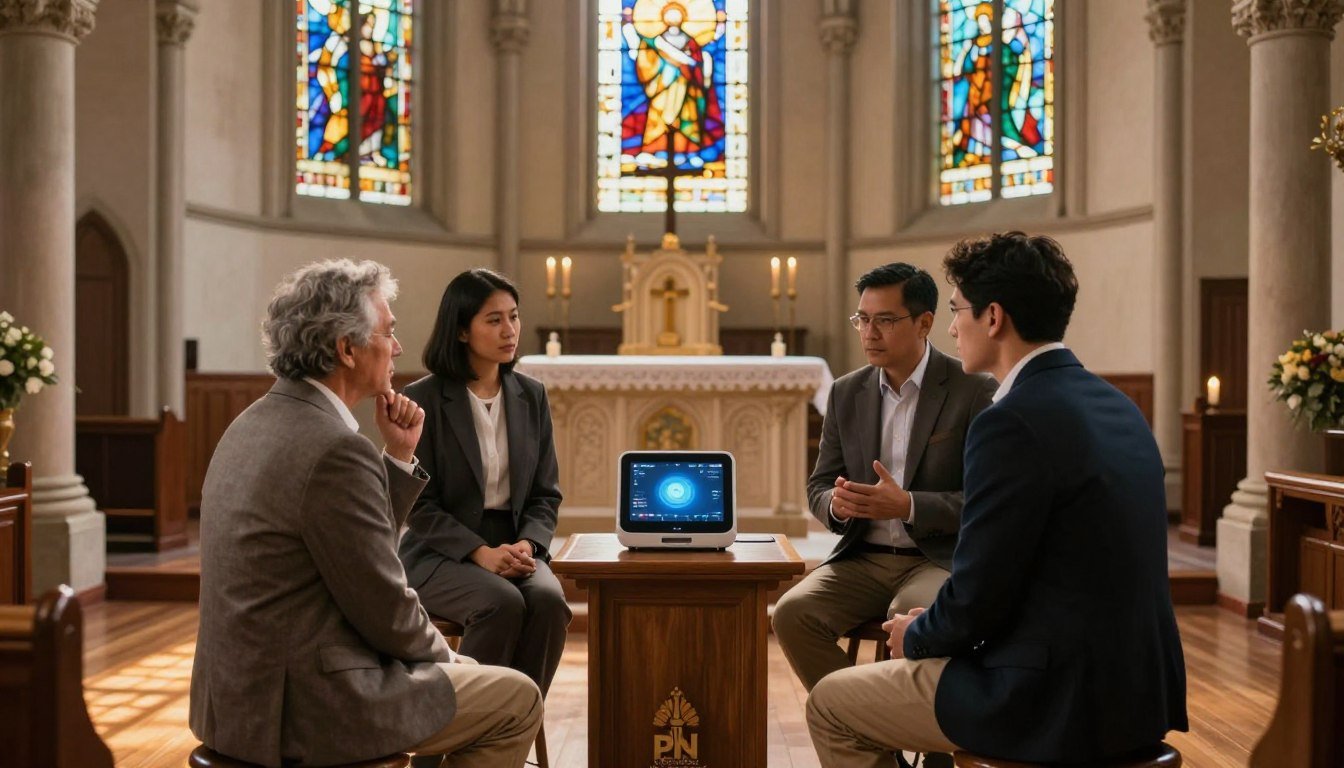
Grace and peace, friends. Like many of you, I’ve been watching with a mix of fascination and caution as Artificial Intelligence has moved from the realm of science fiction into our daily lives. From the search engines we use to the apps on our phones, AI is here, and its presence is growing. Within our faith communities, this new digital frontier brings both excitement and a quiet unease. The question before us, as leaders and laypeople, is not if the church should engage with this technology, but how we can do so with wisdom, discernment, and faithfulness. This is the heart of our exploration today. I believe AI offers a set of powerful new tools that, when used properly, can enhance our ministries in practical and surprising ways. However, it can never—and must never—replace the essential, embodied, and relational heart of the Church and its pastors. Join me, then, as we thoughtfully consider the promise, the peril, and the proper place of AI in service to the gospel.
1. The Promise of AI: A New Tool in the Shepherd’s Hand
1.1. Contextualizing Technology in Ministry
Before we look at specifics, it’s helpful to place AI within a broader biblical framework. Theologian John Dyer reminds us that technology is a gift from God, one that we are called to steward wisely for the good of humanity and creation. From the printing press, which brought the Scriptures to the masses, to the internet, which connects believers across the globe, the Church has always navigated new technological landscapes. Like those innovations, AI is a neutral tool; its value and virtue are determined entirely by how we choose to use it. When wielded with care and a clear sense of purpose, it can become a powerful asset for the modern church, helping us fulfill our mission more effectively. Let’s explore some of the most promising applications.
1.2. Enhancing the Practical Work of Ministry
AI excels at handling routine, data-driven tasks, which can free up pastors and church staff to focus on the deeply human and spiritual work of ministry.
- Streamlining Church Administration: AI can automate many of the routine administrative duties that consume valuable time, such as scheduling meetings, managing member data, sending visitor follow-up emails, and coordinating volunteers. By handling this “busywork,” AI allows pastors and staff to redirect their energy toward pastoral care, discipleship, and strategic leadership.
- Expanding Outreach and Communication: AI can significantly improve a church’s marketing and outreach efforts. It can generate first drafts for weekly newsletters, emails, and social media captions, helping to overcome “blank-page syndrome.” Furthermore, AI-powered chatbots on a church website can answer logistical questions about service times, parking, or kids’ check-in procedures at any time of day, ensuring that a visitor seeking basic information at 11 p.m. doesn’t leave the site empty-handed.
- Increasing Accessibility and Inclusion: In a tangible expression of welcome, AI tools can make worship services more accessible to all members. Software like Microsoft PowerPoint and Google Slides can now provide real-time, live captions for sermons, which is a tremendous gift to hard-of-hearing members. These tools can also offer live translations, breaking down language barriers for multilingual congregations and visitors, aiding in the vital work of inclusion.
- Aiding in Sermon and Content Preparation: It is crucial to be clear on this point: AI should be used as a “sermon prep tool” or an “idea generator,” not as a ghostwriter for the pulpit. As Todd Rohs of Chemistry Staffing wisely explains, AI can help craft a “compelling sermon outline” or provide a “strong starting point,” functioning much like a Bible commentary or concordance in a pastor’s library. It can spark new ideas or suggest a different angle on a familiar passage. However, this assistance must never supplant the pastor’s personal study, prayer, and discernment. As Rohs rightly warns, “your church needs your voice.”
By stewarding these tools with wisdom, we can increase our efficiency and extend our reach. Yet, this promise must be balanced with a sober understanding of AI’s profound limitations.
2. The Peril of AI: A Ghost in the Machine
2.1. The Critical Limitations of Code
Having explored the promise, we must now turn to the peril. This is not a fearful rejection of technology, but a necessary and sober look at the profound limitations and ethical risks of relying on AI in a spiritual context. While artificial intelligence can mimic human conversation, process vast amounts of data, and even generate seemingly empathetic responses, it is fundamentally a system of algorithms and code. It lacks the essential qualities that are at the very core of Christian faith and ministry: a soul, a spirit, and a capacity for genuine love. To ignore these limitations is to risk hollowing out the very heart of our work.
2.2. Analyzing the Inherent Risks
The dangers of misusing AI in ministry are not merely hypothetical. They stem from the inherent nature of the technology itself.
- The Absence of a Soul and Spirit: AI’s greatest and most insurmountable limitation is that it lacks a “human soul that reflects the image of God,” which is the critical ingredient for Christian discipleship. As Rev. Christer Ahl notes, a chatbot can “imitate the words of Jesus,” but it “can’t love like Jesus.” Faith is not merely an exchange of information but a relational journey guided by the Holy Spirit, an experience a machine cannot replicate or participate in.
- The “Empathy Gap”: While AI can be programmed to use empathetic language, its empathy is “simulated, not felt.” It cannot interpret the subtle shifts in body language, tone of voice, and overall presence that are essential for creating an understanding of a person’s emotional state and providing true pastoral care. AI lacks “true empathy, spiritual intuition, and the capacity for moral reasoning,” making it fundamentally unsuited for counseling, spiritual direction, or any ministry that requires a deep, personal connection.
- Theological Inaccuracy and Bias: AI models are trained on vast datasets from the internet, which include a wide spectrum of beliefs, including theologically unsound or even heretical information. This creates a significant risk of generating content that is doctrinally inaccurate. Furthermore, AI is prone to “hallucinations”—presenting completely made-up information as fact. The worldview of a non-Christian developer can also unintentionally shape an AI’s output, introducing subtle biases that a congregation may not be equipped to discern.
- Weakening Community and Human Connection: The church is, at its heart, a gathered community. An over-reliance on AI for communication and engagement risks depersonalizing ministry and eroding the face-to-face, embodied fellowship that is central to our faith. Research has shown that virtual worship is often a less transcendent and less embodied experience than in-person gathering. Technology should build bridges to community, not become a substitute for it.
These limitations are not temporary bugs to be fixed in future updates; they are foundational to what AI is. This reality leads us to a deeper theological truth about why the human element of ministry is, and always will be, irreplaceable.
3. The Irreplaceable Heart of Ministry: Why Humanity Matters
3.1. The Foundational Nature of Embodied Ministry
To fully grasp the proper limits of artificial intelligence, we must first be grounded in the God-ordained nature of the Church and its ministry. The Christian faith is not a collection of disembodied data points or a series of problems to be solved by an algorithm. It is an incarnational faith, rooted in the profound truth that “the Word became flesh and lived among us” (John 1:14). Our ministry, therefore, must reflect this reality. It is fundamentally about presence, relationship, and embodied experience—truths that technology can assist but never, ever replicate. Understanding this is key to putting AI in its proper, supportive place.
3.2. Dimensions of Irreplaceable Human Connection
Several core functions of the church are, by their very nature, human tasks that cannot be delegated to a machine.
- The Church as an Embodied Assembly
- The biblical word for church, ekklesia, literally means a “physical, called-out assembly.” This root definition stands in direct theological contrast to a disembodied, digital gathering, grounding the church in physical presence. Worship, fellowship, and the sacraments are not abstract concepts; they are “embodied experiences” that engage our whole persons. As theologians have noted, salvation is a “full-bodied concern,” and our corporate life must reflect that.
- The Pastor as an Embodied Shepherd
- The pastor’s role is that of an “embodied, human shepherd of God’s embodied, human flock.” This requires a human presence that AI simply cannot provide in several critical areas:
- True Pastoral Care: Genuine care demands presence, empathy, and discernment. A machine can offer information, but it cannot “look you in the eye,” offer a comforting hand, or provide the accountability that comes from a trusted relationship. A chatbot can process words, but as one analysis concludes, machines simply cannot “care.”
- Authentic Preaching: As Paul David Tripp beautifully states, “Preaching is more than the regurgitation of your favorite exegetical commentary.” Rather, it flows from a person “who has been broken and restored by the very truths he stands up to communicate.” A pastor must prayerfully discern God’s specific word for their specific congregation in a specific moment—a deeply relational and spiritual task that an algorithm is incapable of performing.
- Administering the Sacraments: The sacraments are physical rites—the water of baptism, the bread and wine of communion, the oil of anointing. The recent controversy over the “Father Justin” chatbot, where an AI avatar was wrongly presented in the image of a priest, serves as a stark cautionary tale. This was a grievous offense because sacraments are administered by lawfully ordained humans serving in persona Christi (in the person of Christ), a sacred role a machine can never assume. An AI cannot baptize a new believer, offer the cup of salvation, or perform any sacramental act.
- The pastor’s role is that of an “embodied, human shepherd of God’s embodied, human flock.” This requires a human presence that AI simply cannot provide in several critical areas:
- Discipleship as a Relational Journey
- According to a Lifeway Research study, an overwhelming 95% of pastors believe that discipleship is accomplished through relationships, not programs. Spiritual growth requires accountability, vulnerability, and trust built over time through shared human experience. It is in the context of messy, real-world relationships that we are challenged, encouraged, and transformed into the image of Christ. An AI can provide a curriculum, but it cannot provide a companion for the journey.
The incarnational, relational, and sacramental nature of ministry makes the human pastor and the gathered church essential. God designed His Church to be a body, not a database, and its work must be done by people, for people, through the power of the Holy Spirit.
4. Charting the Course: Practical Guardrails for Using AI with Wisdom
4.1. Moving Forward with Discernment
Understanding both the promise and the peril of AI, our goal should not be to reject this technology outright but to adopt it responsibly. To do this, we need clear, biblically-grounded principles to guide us. The following guardrails are designed to help church leaders use AI as a supportive tool for ministry without compromising the theological integrity or relational heart of their calling.
4.2. Four Essential Guardrails for the Church
Here are four practical principles to guide your church’s engagement with artificial intelligence:
- AI Is a Tool, Not a Theologian
- Adopt a simple but non-negotiable rule: “AI drafts; humans decide and deliver.” AI can be a helpful assistant for logistical tasks or generating a first pass of non-theological content, but it must never be the final authority on anything pastoral or doctrinal. Every piece of AI-generated content requires careful human review, theological editing, and spiritual discernment before it is shared.
- Maintain Full Transparency
- Be open and honest with your staff, volunteers, and congregation about how your church is using AI. This transparency demystifies the technology and builds trust. You don’t need a lengthy document; a simple disclosure on your website or in your bulletin, such as, “We use AI to help with administrative drafts and live captions; our pastors and leaders review all content,” is sufficient.
- Protect the Sacred Spaces
- Draw a clear and firm boundary around the core functions of pastoral ministry. AI should not be used for pastoral care, counseling, administering the sacraments, or making final doctrinal statements. Frame this as a strategy to automate the routine in order to prioritize the human. Let an AI-powered chatbot answer FAQs about parking at 11 p.m. so that a pastor is freed up to respond to a prayer request at 11 a.m.
- Prioritize Embodied Community
- Ensure that every use of technology ultimately serves to enhance, encourage, and facilitate in-person, embodied fellowship. Technology should function as a bridge to community, not a replacement for it. If a tool doesn’t help bring people together or deepen their connection to the church body, it is not the right tool for ministry.
By establishing these guardrails, we can harness the benefits of AI while protecting the irreplaceable essence of our ministry.
5. Conclusion: Shepherding in a New Age
As we stand on the cusp of this new technological age, it is clear that AI is a powerful tool, but it is a poor substitute for a shepherd. It can organize our tasks but cannot comfort our souls. It can generate text but cannot preach with conviction born of a life transformed by grace. I encourage you, my fellow leaders, to approach AI not with fear, but with the wisdom and discernment that has always guided the Church through times of change. Let us steward these new tools responsibly, using them to streamline our work so that we can devote more of ourselves to the ministry that only humans can do. May we always keep the irreplaceable, human-to-human, and Spirit-led nature of our calling at the forefront. The tools in a shepherd’s hand may change, but the mission never will: to know the flock, to guide them with a human voice, and to lead them faithfully in a world that desperately needs the authentic, embodied presence of the Church.