“And be not conformed to this world: but be ye transformed by the renewing of your mind…” — Romans 12:2
I’ll be honest with you—I didn’t download TikTok at first.
Not because I thought it was evil. Not because I was afraid of technology. I simply thought, “That’s for the younger generation. It’s dancing, comedy, and noise.” I was wrong.
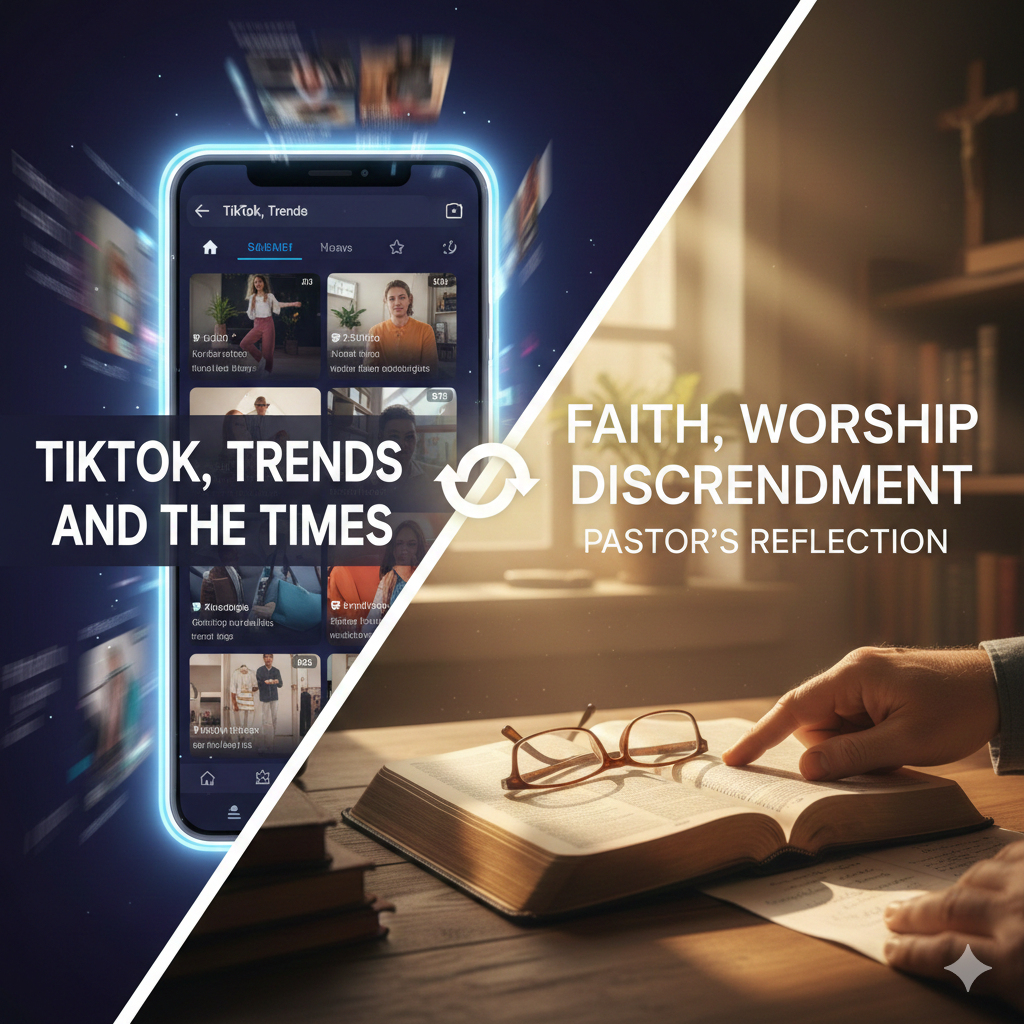
What I’ve come to realize over the last few years—and especially now, in 2026—is that TikTok isn’t just entertainment. It’s formation. It is shaping how people think, what they value, what they believe, and even how they understand spirituality.
And as a pastor, that realization stopped me in my tracks.
A Moment That Made Me Pause
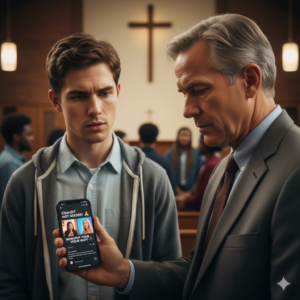
Not long ago, after a Sunday service, a young man approached me. He was sincere, respectful, and clearly hungry for God. He said, “Pastor, I saw this clip on TikTok where someone said you don’t really need the church anymore—you can just worship God on your own, however you feel led.”
I could tell he wasn’t trying to challenge me. He was genuinely confused.
That conversation stayed with me.
Here was someone who loved God, wanted truth, and yet was receiving theology in 60-second soundbites from strangers with large followings. That’s when it hit me: the pulpit has competition now—and it’s always on, always accessible, and emotionally persuasive.
The Speed of Culture vs. the Depth of Faith
TikTok thrives on speed. Trends rise overnight and disappear just as fast. One week it’s fashion, the next it’s identity, the next it’s spirituality wrapped in aesthetic lighting and background music.
But faith has never been fast.
Discipleship is slow.
Spiritual maturity takes time.
Truth requires reflection.
Scripture was not written to be skimmed—it was written to be meditated upon.
“Blessed is the man… whose delight is in the law of the Lord; and in his law doth he meditate day and night.” (Psalm 1:1–2)
The danger of trend culture isn’t just misinformation—it’s shallowness. When everything is reduced to a clip, depth is lost. Conviction is replaced by vibes. Doctrine is replaced by feelings.
And feelings, while real, are not reliable guides for truth.
When Worship Becomes Content
 I love worship. I’ve spent decades around altars, musicians, prayer rooms, and moments where heaven felt close enough to touch. Worship has changed my life.
But I’ve noticed something troubling in recent years.
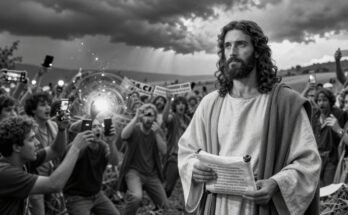
I’ve seen worship moments carefully staged for cameras.
I’ve watched prayer become performance.
I’ve seen tears turned into thumbnails.
Now hear me clearly: I am thankful when worship reaches people online. God can use anything. But when the goal shifts from glorifying God to gathering views, something sacred is at risk.
Jesus never performed worship for an audience.
He withdrew.
He knelt alone.
He prayed in agony when no one was watching.
“When thou prayest, enter into thy closet…” (Matthew 6:6)
The heart of worship is not presentation—it is surrender.
A Personal Wake-Up Call
I remember years ago, long before social media ruled everything, sitting with an elderly saint in our church. She couldn’t sing well. She had no microphone. But when she prayed, the room changed.
No filters.
No platform.
Just faith.
That’s when I ask myself today: Are we raising worshippers—or content creators?
There’s a difference.
Discernment: The Missing Discipline
One of the greatest casualties of the digital age is discernment.
We scroll fast.
We react quickly.
We rarely pause to ask, “Is this biblical?”
The Bible warns us:
“Try the spirits whether they are of God.” (1 John 4:1)
Not everything that sounds spiritual is spiritual.
Not everything that feels good is God.
Not everyone quoting Scripture is teaching truth.
As a pastor, I feel this burden deeply. We must teach believers not just what to believe, but how to discern.
Discernment is not suspicion—it’s wisdom.
When Popularity Replaces Authority
On TikTok, authority is measured by followers.
In the Kingdom of God, authority is measured by fruit.
I’ve seen influencers with no accountability shaping theology.
I’ve seen viral opinions contradict Scripture.
I’ve seen people deconstruct faith not because of Scripture—but because of trends.
Paul warned Timothy:
“For the time will come when they will not endure sound doctrine…” (2 Timothy 4:3)
That time is not coming.
It’s here.
But Let Me Say This Clearly…
I am not anti-technology.
I am not anti-TikTok.
And I am certainly not anti-young people.
In fact, I believe this moment presents one of the greatest evangelistic opportunities in history.
The early Church used Roman roads.
We now have digital highways.
The question isn’t whether the Church should be online.
The question is who we are becoming while we’re there.
Purpose Over Popularity
 I tell our worship team often: “We are not chasing applause—we are chasing presence.”
If God gives influence, we steward it.
If God gives reach, we use it.
But we never trade truth for trends.
Jesus fed crowds, but He discipled twelve.
He healed many, but He committed deeply to a few.
Viral moments fade.
Transformed lives endure.
A Final Pastoral Appeal
If you’re a believer navigating this digital world, let me encourage you:
- Stay rooted in ScriptureStay connected to the local churchStay sensitive to the Holy Spirit
Use technology—but don’t let it use you.
And remember:
“See then that ye walk circumspectly, not as fools, but as wise, redeeming the time…” (Ephesians 5:15–16)
These are not times for fear—but for faithful discernment.
I believe God is raising a generation that can navigate culture without bowing to it. A generation that can worship without performing. A generation that can use platforms without losing purity.
May we be that people.