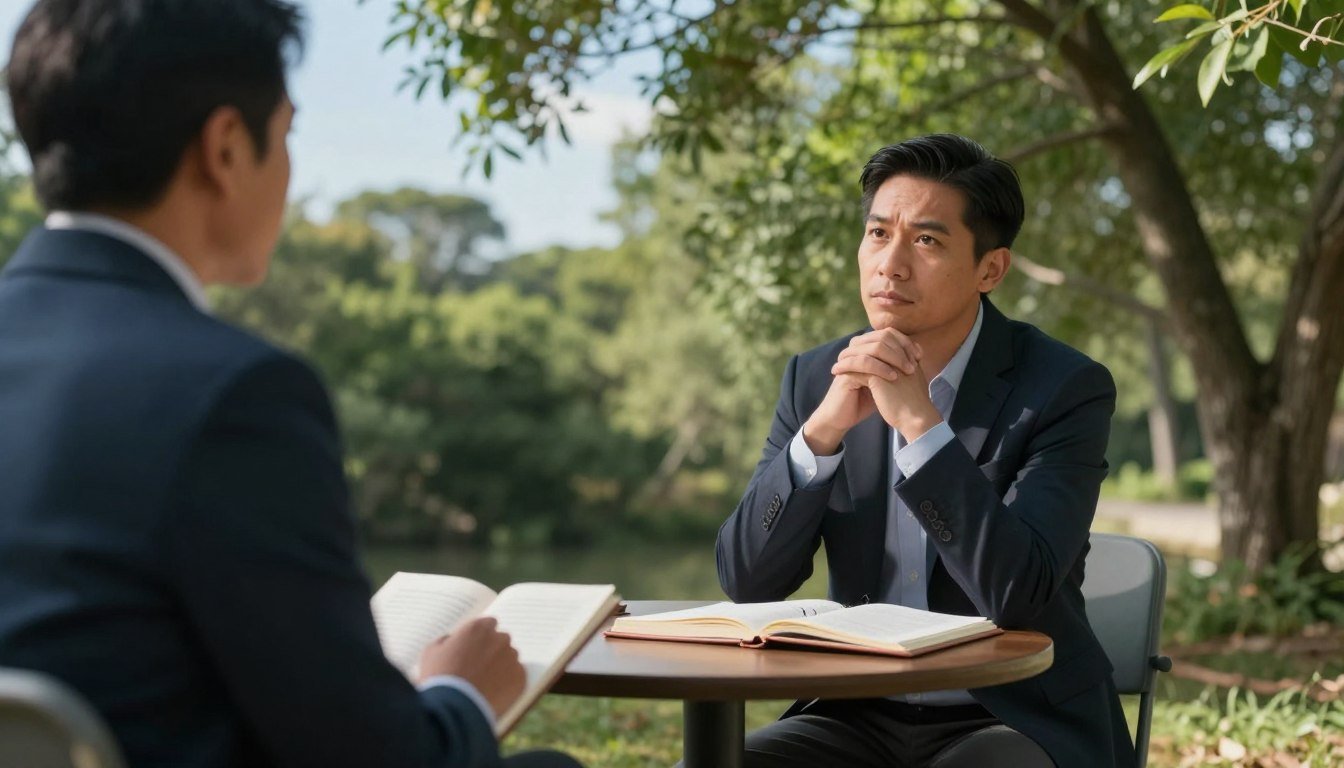
When someone mentions Indigenous Peoples’ Day, I can feel my mind reach for a rebuttal before my ears catch up. That reflex can sound like loyalty to a familiar history, though it may shut out Indigenous experiences.
Those perspectives deserve a hearing, even when the conversation feels awkward or unsettles what I learned. Lament means honest grief expressed before God over suffering and injustice. Christian faith calls me toward dignity, listening, and grace, not a tidy answer to generations of harm.
No brief guide can repair that harm or speak for every community. It can help us choose truth over quick defense and make room for hope. I invite you to listen first, then face the wounds history has left.
Key Takeaways
- Listen before you reach for a rebuttal.
- Name harm without flattening different experiences.
- Let Indigenous-led efforts set their own priorities.
- Respect faith and culture without making assumptions.
- Keep showing care beyond one day.
Why Should Christians Face the Wounds of the Past?
Christians cannot offer comfort while refusing to name the wound. Facing historical harm is part of truthful care, not a political trap; the details differ among Indigenous communities.
Facing historical harm is part of truthful care, not a political trap.
Indigenous Peoples’ Day recognizes Indigenous histories and perspectives. It was first proposed at a United Nations conference in 1977. In the United States, it falls on the second Monday in October, the same day as Columbus Day.
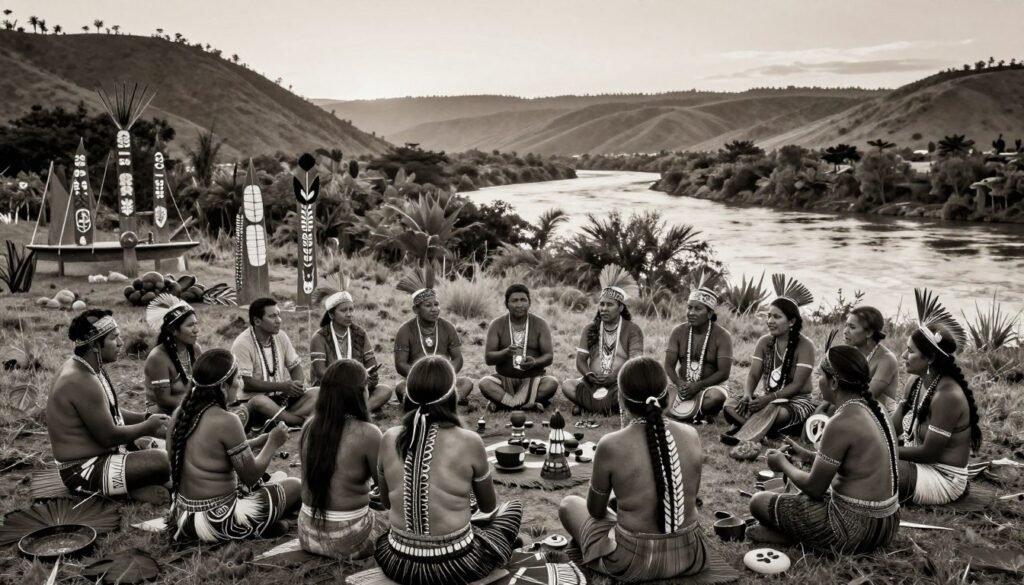
Columbus arrived in the Americas in 1492. Millions of Indigenous people lived across the Americas before then, in diverse nations with many languages and cultures. Colonization brought disease, violence, displacement, forced labor, land loss, and the loss of cultural traditions.
Did Colonizers Force Christianity?
Yes, colonizers and later governments used force to impose Christianity and assimilation on Indigenous people. That history includes pressure to abandon languages, customs, and community ties. Experiences varied, so no single account describes every people or family.
Forced conversion to Christianity in history must not be confused with freely chosen Christian faith today. Indigenous Christians can choose to follow Christ, while others hold different beliefs. Abuse done in Christianity’s name does not define every believer or community.
We should face those facts without using them to judge every Indigenous person or every Christian. The question is not whether harm happened, but whether we will hear its impact.
How Many Native Americans Were There?
Millions of Indigenous people lived throughout the Americas before Columbus arrived. There is no one precise population count to give here. The region held many distinct nations, and a single number cannot capture their range or history.
That answer is not a reason to treat people as if they were in the distant past. Indigenous communities continue to live, speak their languages, and carry traditions today. The word “people” includes living communities, not only ancestors in a history book.
What Does Christian Lament Look Like?
Christian lament makes room for grief before God, rather than rushing to defend or explain. Psalm 147:3 portrays God as binding up broken hearts. That image asks Christians to take pain seriously, not hurry past it.
Jesus’ story of the Good Samaritan offers a practical picture: he refuses to cross to the other side. He stops and cares for the injured man. Christians can begin by facing injustice with that same willingness to draw near.
Honest grief is a beginning, not a substitute for repair. Christians must let that grief lead toward reconciliation, rather than treating sorrow as the final answer.
What Does the Bible Say About Reconciliation?
Scripture calls Christians to be agents of reconciliation. In 2 Corinthians 5:18-19, Paul says God gave believers the work of reconciliation through Christ. Christian mission must seek peace without excusing coercion or racism.
That calling applies to Indigenous peoples as distinct communities, not as a single group with a single story. What the Bible says about Native Americans begins with the equal dignity of every person. It calls Christians to oppose prejudice and pursue justice in daily life.
Reconciliation Is a Christian Calling
Reconciliation is more than a seasonal gesture or a kind word. It means facing wrongs and changing actions that keep harm in place. Christian theology cannot claim a faithful mission while ignoring the ways people used religion to control others.
A federal investigation report published in May 2022 described the U.S. government’s contracts with religious groups to run Indian boarding schools. The schools aimed to force conversion and assimilation of Indigenous children. Children could be punished for speaking their Native languages or practicing their cultures.
On June 14, 2022, the Southern Baptist Convention passed a resolution on religious liberty, forced conversion, and the federal Indian boarding school investigation. The resolution marked a public acknowledgment of religious wrongdoing. Abuse done in Christianity’s name betrayed the gospel; it did not express it.
A Christian response should name that betrayal without asking Indigenous people to make the truth easier to hear. An apology matters, but it cannot stand in for justice or changed conduct. Reconciliation asks what repair requires now.
Nehemiah and Daniel Confessed Communal Brokenness
Nehemiah and Daniel prayed about wrongdoing shared across their people and generations. They confessed communal brokenness rather than limiting their prayers to personal faults. Their examples show that Christians can honestly name inherited harm.
That does not mean you must claim personal guilt for acts you did not commit. It means you can accept responsibility for how you respond to their effects today. A prayer of confession can open the door to truth, humility, and action.
Scripture’s call is not permission to speak for Indigenous communities or decide what they need. It asks Christians to face our own duties with care. That duty begins in ordinary conversations, where listening without defensiveness takes practice.
How Can Christians Respond to Indigenous Peoples’ Day?
If someone describes harm, I can let them finish before I explain my good intentions. James 1:19 tells Christians to be quick to listen and slow to speak. Listening is not a setup for a rebuttal; it is a way to honor the person speaking.
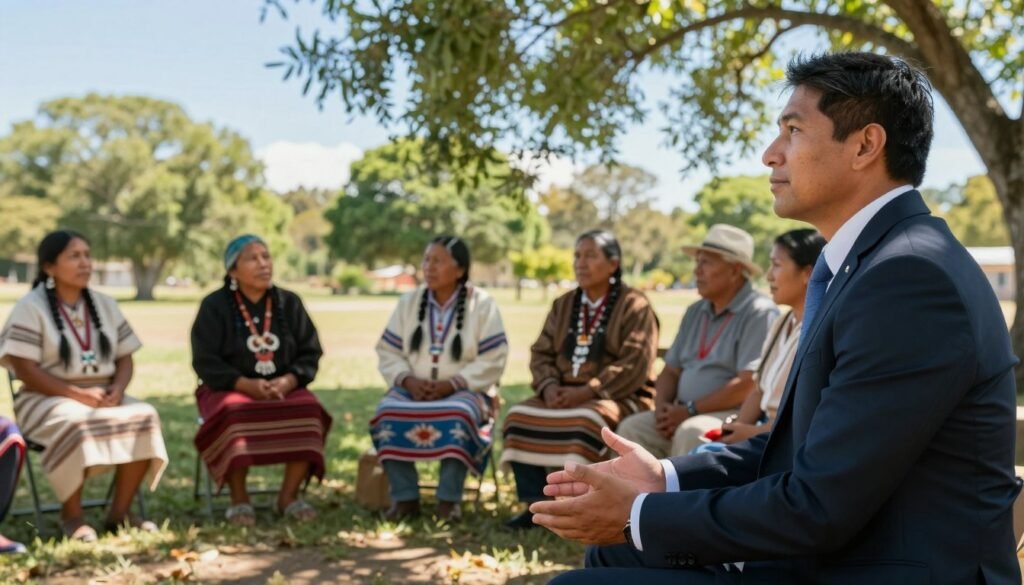
That can feel awkward, especially if you worry that silence looks like agreement with every claim. It does not. You can hear someone fully before asking a careful question or sharing what you know.
| Situation | Defensive reflex | Christian alternative |
|---|---|---|
| Hearing historical criticism | Immediately defending intentions | Acknowledge the harm and listen |
| Encountering grief or anger | Demanding a quick explanation or apology | Let the speaker set the terms |
| Wanting to help | Assuming what a community needs | Ask what Indigenous-led groups prioritize |
Listen First, Without Defensiveness
Try not to treat another person’s pain as a test you must pass. You can say, “I hear you,” then ask what they want you to understand. An Indigenous person does not have to explain every detail or speak for all Indigenous peoples.
When you hear criticism, notice the urge to list good intentions. Intent may matter, but it does not erase impact. Make room for the other person’s account before you decide what to say next.
Take Practical Steps That Follow Indigenous Leadership
Support works best when Indigenous-led groups set the priorities. These actions can help keep your response grounded in community needs rather than in your own guesses about what would be useful.
- Learn local Indigenous history through Indigenous-led material.
- Listen to Indigenous perspectives without asking one person to represent everyone.
- Support Indigenous-led community efforts through appropriate giving or volunteering.
- Oppose prejudice and discrimination in everyday interactions.
- Pray for healing, justice, healthy families, and hope.
Prayer should accompany listening and tangible support, not replace either one. A land acknowledgment, a social media post, or a one-day observance cannot prove that reconciliation is complete. These gestures may begin a conversation, but lasting care requires steady attention.
Consistent, community-guided action matters beyond the holiday. Ask Indigenous-led groups what help they want, then respect their answer. That practice also makes room to honor culture and identity without imposing assumptions.
How Can Christians Honor Indigenous Identity and Culture?
Neither Indigenous identity nor Christian belief can be reduced to one stereotype. Indigenous peoples include many nations and traditions, so no single “Native American religion” can stand for them all.
Respect each person’s choices; do not assume culture and Christian faith must compete.
https://www.youtube.com/watch?v=qFo8FPEsCx0
The differences between Christianity and Native American religion cannot be summed up in a single list of shared or opposing beliefs. Beliefs and practices vary among communities and individuals. Some people follow Christianity, some follow Indigenous traditions, and some describe their beliefs in other ways.
Christianity and Native American Religion Are Not Interchangeable
“Native American religion” can wrongly suggest one uniform set of beliefs. Indigenous peoples have distinct histories, spiritual practices, and views within their own communities. The same is true of Christians, whose beliefs and customs also vary.
So, when someone asks about Native Americans and Christianity, I would avoid assuming there is one answer. A person’s identity, faith, and relationship to a community are theirs to describe. Curiosity is welcome when it does not turn a person into a lesson or spokesperson.
Faith and Cultural Identity Can Coexist
Indigenous Christians may keep their cultural identity, language, and heritage while following Christ. Views on particular ceremonies can differ among Christians and communities. No outsider should decide that one person’s faith makes their identity less real.
Native American conversion to Christianity must be understood with care. Forced conversion belongs to the history of colonization, but it does not define every Indigenous Christian’s faith or choices today. People have their own reasons and paths.
A little humility can prevent a lot of awkward assumptions. Before speaking about someone’s beliefs or customs, remember that identity is personal and communities are diverse.
- Use the names people and communities choose for themselves.
- Do not ask one person to speak for all Indigenous peoples.
- Avoid assuming cultural practices or beliefs.
- Respect that people may hold Indigenous identity and Christian faith together in different ways.
Respect each person’s dignity and choices, even when their path differs from yours. That respect offers a way to practice grace consistently, not just when the topic feels easy.
Conclusion
Lasting reconciliation grows when truth meets grace. Grace means taking harm seriously, listening without demanding that pain become comfortable, and supporting Indigenous-led efforts beyond one holiday.
You do not need a perfect speech to begin. Before Indigenous Peoples’ Day arrives, identify one Indigenous-led community effort in your area and learn what support it requests. Then follow its lead with care. Let that single next step shape how you show love, hope, and respect for people’s dignity on ordinary days, too.