Do you wake up and grab your phone before finding your socks? Your blood pressure might spike. We live in a time when “Breaking News” wakes us up.
The world seems to be always on fire. With global issues and digital noise, it’s hard to keep up. Matthew 24 talks about wars and disasters, but it doesn’t say to freak out over every piece of news.
There’s a big difference between a biblical sound mind and media panic. The world wants you to fear every crisis. But your faith offers a calm path. We’re called to be watchful, not frantic. By cultivating Christian peace through prayer and habits, we can control our emotions.
Key Takeaways
- Constant news alerts aim to make you feel scared.
- Matthew 24 guides us to stay grounded, not anxious.
- Know the difference between being informed and getting overwhelmed by news.
- Choose Scripture and prayer over endless news.
- Set limits on your devices to protect your mind and spirit.
The Relentless Breaking News Cycle and the Rise of a Culture of Alarm
Do you feel like the news cycle controls your nerves? You’re not alone. We live in a world where even small issues are blown out of proportion. This constant stream of news can make you feel drained before your morning coffee.
How 24/7 Headlines Turn Every Development Into an Emergency
Remember the last time you checked your phone? You probably saw a “breaking” news alert that was just an old story. News outlets make a big deal out of small things, flooding you with updates and opinions.
It’s all about keeping you engaged. Jesus talked about wars, rumors of wars, famines, and earthquakes in Matthew 24:6–7. But today, every update feels like a major crisis. They want you to think every piece of news is urgent.
Why Speed, Outrage, and Constant Updates Shape Public Perception
News platforms aim to keep you hooked, not calm. They use speed and shock to get your attention. This makes it hard to tell what’s really urgent.
They want to keep you alert. By the time you read a headline, you’re already feeling anxious or upset. It’s a clever way to keep you coming back, even if it’s bad for your mental health.
The difference between being informed and being emotionally governed by the news
Being informed and being controlled by news are two different things. Being informed means you understand what’s happening. Being controlled means your emotions are ruled by the news. Here’s how they compare:
| Feature | Informed Believer | Emotionally Governed |
|---|---|---|
| Primary Goal | Understanding truth | Seeking validation |
| Reaction to News | Prayer and discernment | Panic and reactivity |
| Mental Health | Stable and grounded | Anxious and volatile |
| Media Influence | Limited and intentional | Constant and consuming |
Understanding the media’s influence on mental health is key to taking back control. You don’t have to let the news cycle control you. Sometimes, the best thing to do is turn off the screen and relax.
The Spiritual Toll of Living in a Perpetual State of Emergency
Have you ever felt like your prayers are more like an emergency call than a calm talk with God? Our world demands our constant attention, making every small news story seem like a big crisis. This constant flow of news changes how we think and feel inside.
How Chronic Alerts Affect Christian Mental Health and Prayer
Every five minutes, your phone buzzes with a new “breaking” news alert. This keeps your brain on high alert. The media’s influence on mental health is huge, leaving us tired before we even have our morning coffee. Instead of sharing our worries with God, we tell Him the latest news as if He hasn’t seen it all.
True Christian mental health means protecting our hearts from this noise. When we pray like it’s a news update, we lose the closeness of prayer. We stop hearing God’s gentle voice because we’re too busy checking our phones.
Recognizing Fear, Irritability, Distrust, and Exhaustion as Warning Signs
Matthew 24:12 says lawlessness will grow, and love will fade. You might see this in yourself as irritability, distrust, or emotional shutdown. If you snap at your family or feel dread with every app, you’re experiencing burnout from constant emergencies.
Seeing these signs as warnings is key, not just as a way of “staying informed.” Constant exhaustion makes us lose grace. We start to see the world through fear, the opposite of the peace promised to us.
When concern for the world replaces confidence in God
There’s a thin line between caring for others and doubting God’s control. When our worry turns into obsession, we say the world’s problems are bigger than God’s plan. This shift traps us, making us rely on ourselves rather than trust God.
| Feature | Healthy Vigilance | Media-Induced Panic |
|---|---|---|
| Primary Focus | God’s Sovereignty | The Latest Crisis |
| Emotional State | Peaceful Trust | Chronic Anxiety |
| Prayer Life | Communion & Intercession | Emergency Briefing |
| Outcome | Spiritual Growth | Emotional Exhaustion |
We must ask if our daily habits bring us closer to peace or keep us agitated. It’s okay to step back, turn off alerts, and remember who’s in charge of history.
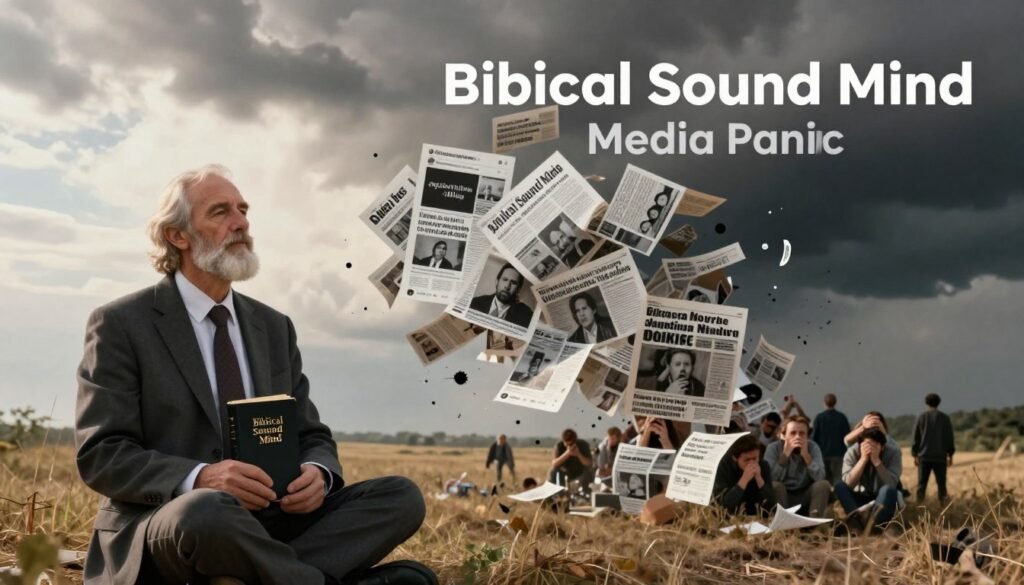
Biblical Sound Mind vs. Media Panic: Cultivating Christian Peace
Keeping calm when the internet is loud is like an Olympic sport. We often confuse being informed with being anxious. But there’s a better way to handle the noise.
Cultivating a biblically sound mind vs. media panic means not treating every alert as urgent. It’s about finding peace in the midst of chaos.
What Second Timothy 1:7 Reveals About Power, Love, and a Sound Mind
Paul’s letter to Timothy tells us God gave us power, love, and a sound mind. This Christian perspective on peace isn’t about ignoring reality. It’s about trusting in God’s truth.
When you feel anxious, remember a sound mind is a gift from the Holy Spirit. It helps you stay grounded in your faith, even when news is overwhelming.
Why First Corinthians 14:33 Rejects Confusion as a Spiritual Governing Force
If news makes you feel disoriented, it’s not God’s nature. 1 Corinthians 14:33 says that God is the author of peace, not of confusion. If something makes your heart chaotic, it’s not from God.
We often let the media dictate our mood. But we’re called to let Christ’s peace rule our hearts. Rejecting confusion is a powerful act of spiritual discipline in a chaotic world.
Distinguishing Biblical Vigilance From Fear-Based Reactivity
Being watchful is different from being reactive. Matthew 24:36 reminds us that no one knows when Christ will return. So, we don’t need to decode every news cycle as a secret prophecy.
Fear makes us jumpy and gullible. Biblical vigilance keeps us grounded in prayer. It’s about watching for the King, not waiting for the next disaster.
How a peaceful mind can remain attentive without becoming passive
You might think letting go of panic means ignoring reality. But seeking biblical wisdom for peace of mind actually makes you more effective, not less.
A peaceful mind is active. It prays, serves, and loves neighbors instead of scrolling through doom. You can stay informed and attentive without letting the world control your emotions.
Reading Inflation, Global Turmoil, and Prophecy Through God’s Sovereignty
Ever feel like a disaster movie when you see a headline about inflation? We often see every economic change as a threat to our comfort. The constant hum of economic anxiety can make us forget God’s control.
What Current Economic Pressure Can Reveal About Fear and False Security
When prices go up, we see what we really trust. If our peace depends on money, market changes can shake us. True security comes from God, not our bank accounts.
Economic troubles mirror our idols. Instead of panicking, we can seek biblical wisdom for peace of mind. Our money may change, but our relationship with God is forever.
How Christians Should Think About Prophecy and Events That Appear to Fulfill It
We often try to predict the future when news gets intense. It’s tempting to link every crisis to the end times. But Jesus said in Matthew 24:36 that only the Father knows when He will return.
We should be watchful, but not obsessed. The words of Christ are our anchor. Focus on living today, not guessing tomorrow.
Reporting What Happened Without Pretending to Know What Comes Next
There’s a big difference between observing and predicting the future. When sharing news, stick to facts. Humility is key when discussing global events.
Separating verifiable developments, interpretation, and speculation
To keep our sanity, we must sort the information we get. By knowing what’s real and what we fear, we can find biblical wisdom for peace of mind in a chaotic world.
| Category | Definition | Action |
|---|---|---|
| Verifiable Fact | Confirmed data or events. | Accept and pray. |
| Interpretation | The “why” behind the news. | Test against Scripture. |
| Speculation | Guessing the future. | Discard and ignore. |
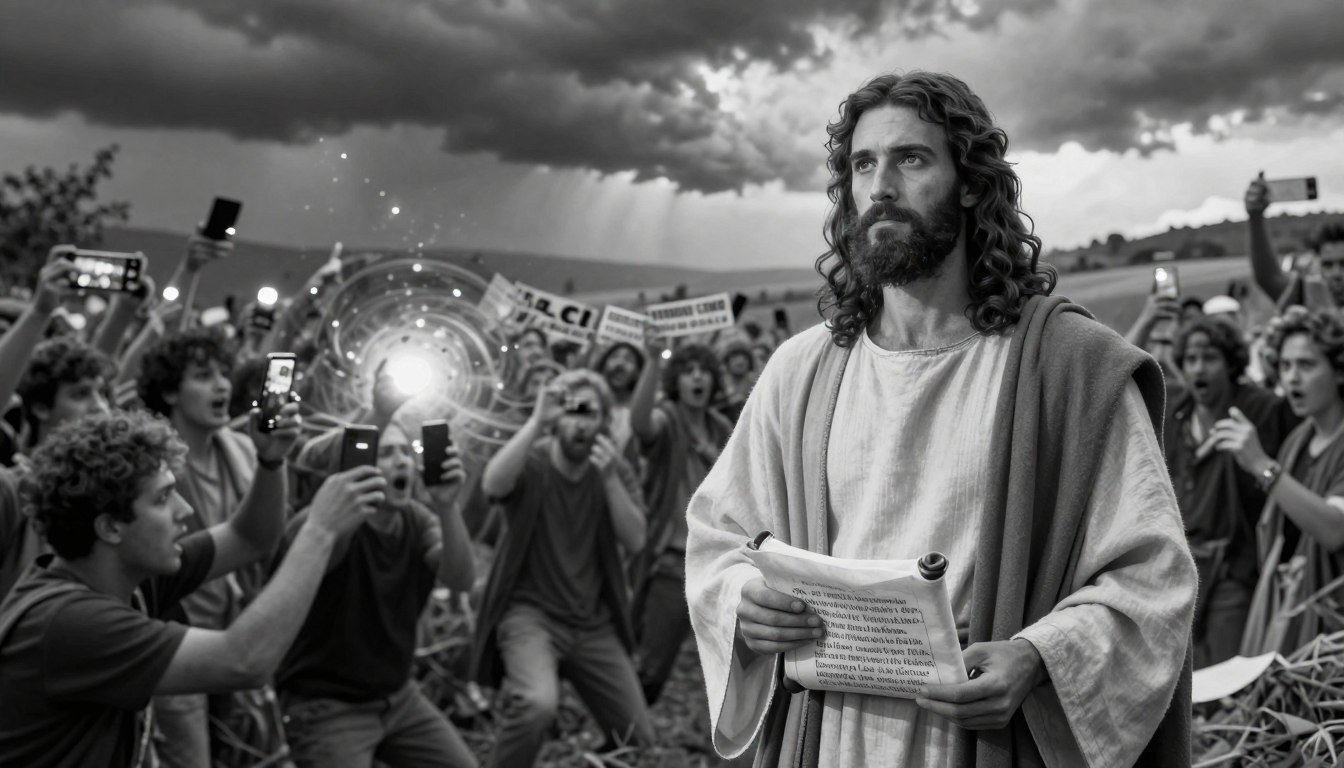
Peter’s Sudden Shift From Divine Revelation to Carnal Resistance
If you think your spiritual life is always getting better, Peter’s story in Matthew 16 might change your mind. We often believe that after a “lightbulb moment” with God, we’re set for life. But overcoming panic with faith is a daily, messy, and often repetitive process.
Peter Confesses Jesus as the Christ in Matthew 16
Peter starts off strong. When Jesus asks who the disciples think He is, Peter answers, “You are the Christ, the Son of the living God.” It’s the ultimate spiritual A-plus.
He’s riding high on divine revelation. He has clearly tapped into something beyond his own intellect. For a brief moment, he’s the star pupil of the apostolic class.
How Spiritual Insight Can Be Followed by Fleshly Assumptions
But then, the mood shifts fast. Almost immediately after his brilliant confession, Peter tries to rebuke Jesus for talking about the cross.
He goes from being a mouthpiece for God to a mouthpiece for his own fleshly comfort. It’s a classic case of having the right theology but the wrong agenda.
We do this all the time. We confess that God is in control, yet we panic when our personal comfort or safety is threatened.
Why a Correct Confession Does Not Automatically Produce Surrendered Thinking
The truth is, a correct confession doesn’t mean your brain is fully surrendered. You can recite all the right creeds while your heart is busy plotting a way to avoid the cross.
Jesus makes it clear in Matthew 16:24 that following Him requires taking up a cross, not signing up for a life of ease. Overcoming panic with faith means accepting that discipleship is not a subscription to permanent personal comfort.
Faith must reshape our actual thoughts, not just our vocabulary. If we want to stop the cycle of alarm, we have to stop assuming that God’s plan should look like our version of a “good life.”
The Spiritual Contradiction of Saying, “Never, Lord”
Have you ever thought about how “Never, Lord” sounds like a prayer but blocks the way? It’s a spiritual paradox. We claim to follow the King, but try to change his job.
It’s easy to follow Jesus when things are good. But when it gets tough, we look for a way out.
Peter’s Resistance to the Cross and the Cost of Rejecting God’s Purpose
Peter wasn’t trying to be bad when he rebuked Jesus. He was scared of losing his hero. He wanted a kingdom without pain, like a workout without sweat.
“If anyone would come after me, let him deny himself and take up his cross and follow me.”
Rejecting the cross means more than avoiding pain. It’s about refusing God’s mission. True discipleship means no more negotiating.

How Human Comfort Can Compete With Eternal Mission
We often dress up our desire for comfort as “wisdom.” We think being safe means being effective. But history shows the gospel spreads when things are tough.
When we focus on personal peace, we lose our salt and light. We protect our kingdoms instead of advancing God’s.
Evaluating whether personal safety, stability, or preference has become an idol
It’s time to be honest about what we worship. If keeping your 401(k) or social status is your main goal, you might have idolized them.
- Does your anxiety spike when your routine is interrupted?
- Do you prioritize your comfort over your neighbor’s needs?
- Are you more concerned with political stability than spiritual growth?
Learning to Receive Hard Truth Without Abandoning Faith
Receiving a hard truth is like taking medicine. It tastes bad but heals. You don’t have to love the trial to trust God.
Good coping strategies for Christians involve trusting God’s sovereignty. When you want to say “Never, Lord,” ask if you’re protecting comfort or character.
Prayer and community help you face the hard stuff. You can stay faithful, humble, and compassionate, even when things seem out of control.
Fear-Driven Sensationalism Versus a Mind Stayed on God
Do you feel your blood pressure rise with every news alert? You’re not alone. Our devices buzz with “emergencies” all day, thanks to sensationalists. It’s easy to let these distractions control our mood.
Applying Isaiah 26:3 to Headlines, Alerts, and Social Media Commentary
Isaiah offers a timeless solution for our digital woes. He says God keeps us peaceful if we focus on Him. Overcoming panic with faith begins with choosing what we focus on before checking our phones.
“You will keep in perfect peace those whose minds are steadfast, because they trust in you.”
How Sensationalism Converts Uncertainty Into Panic
Sensationalism turns small facts into big crises. We often confuse the author’s emotions with the real event. Jesus warned us not to worry about rumors of wars, knowing we tend to exaggerate.
When you see a headline trying to shock you, remember it’s about clicks, not truth. By recognizing this, you can choose coping strategies for Christians who seek truth over outrage.
Practical Ways to Pause, Verify, and Pray Before Sharing Alarming Claims
Before sharing, try a three-step process to calm your heart. This habit keeps you grounded in reality, not swept up in fear.
- Pause: Take a deep breath and step away from the screen for five minutes.
- Verify: Check if the report comes from a reliable source or just a random account with a loud opinion.
- Pray: Ask God for wisdom and a calm spirit before you decide to pass the information along.
Using trustworthy reporting without surrendering emotional control
Staying informed is important, but not at the cost of your peace. You can understand the world without letting it upset you. True vigilance means being aware while staying rooted in God’s sovereignty.
By using these coping strategies, you safeguard your mental space. Remember, overcoming panic with faith isn’t about ignoring the world. It’s about engaging with it from a place of calm, not fear.
Carnal Consumption Versus Walking in the Spirit
Let’s be honest: your smartphone is probably more of a spiritual drain than a tool for enlightenment. We often convince ourselves that staying glued to the latest headlines is a form of being “informed,” but deep down, we know it’s mostly just feeding our anxiety.
Applying Romans 8:6 to Media Habits and Mental Preoccupation
The Apostle Paul hits the nail on the head in Romans 8:6. He says that the mindset of the flesh is death, while the mindset of the Spirit is life and peace. When we let the 24/7 news cycle dominate our minds, we choose to set our minds on the flesh.
This isn’t just about reading the news; it’s about the emotional residue it leaves on us. If your daily input is outrage-driven media, you trade peace for constant panic.
When News Consumption Becomes a Form of Fleshly Fixation
Many of us misinterpret Matthew 24:42 as a call to refresh our news apps all day. But that verse is about faithful readiness for the Lord’s return, not about a grudge against every politician or global event.
When we treat news consumption as a form of fleshly fixation, we lose our ability to discern what actually matters. We become reactive, irritable, and exhausted, mistaking our agitation for spiritual alertness. It is time to admit that doom-scrolling is not a spiritual discipline.
Faith-Based Stress Management Through Silence, Scripture, and Wise Limits
To maintain a peaceful mind in a media-driven world, we have to get intentional about our intake. This requires a shift toward faith-based stress management that prioritizes silence and Scripture over the latest breaking alert.
Instead of letting the world set the tone for your day, try starting with prayer and a few verses of truth. By grounding yourself in God’s word first, you create a filter that helps you process the world’s chaos without letting it consume your internal peace.
Creating boundaries for notifications, commentary, and repeated coverage
You don’t need to know about every minor development the second it happens. Start by turning off non-essential notifications and limiting your exposure to “hot take” commentary that only serves to stir the pot.
- Schedule specific times to check the news instead of keeping it open all day.
- Avoid reading repeated coverage of the same alarming story.
- Prioritize sources that provide facts without heavy emotional manipulation.
By setting these boundaries, you aren’t burying your head in the sand; you are protecting your heart. You are choosing to remain aware while refusing to let outrage become your daily nutritional plan.
Earthly Agendas Versus the Exaltation of Christ
Keeping a peaceful mind in a media-driven world is hard. Every notification seems like a battle call. Our digital feeds turn us into political warriors instead of followers of Jesus.
https://youtu.be/FRu2Ggn5n0c
Reading Second Corinthians 4:5 in an Age of Competing Narratives
Paul’s words in Second Corinthians 4:5 are a wake-up call for us today. He tells us we preach Christ, not ourselves. When we let our views dominate, we lose sight of the Gospel.
It’s easy to make the cross message just another slogan. We must check if we’re truly lifting up Christ or just backing our own views.
How Political and Cultural Agendas Can Displace the Gospel
When we focus on politics or culture, the Gospel gets overlooked. It becomes secondary, not the core of our lives. This starts with a single angry post or heated discussion.
Soon, our identity becomes tied to a group more than to God’s kingdom. We see others as enemies, not as people in need of grace.
Keeping Christ Central Without Ignoring Public Injustice or Human Suffering
Keeping Christ central doesn’t mean ignoring injustice or suffering. We must care about these issues. But our actions should be based on faith, not fear.
Endurance is key. As we face challenges, we must reflect Jesus’ character. We can stand up for what’s right without losing our peace of mind in a media-driven world.
Speaking truth with humility, not factionalism
Speaking truth is vital, but how we do it matters. If our words are sarcastic or argumentative, we’re serving factions rather than the Gospel. True humility knows we don’t have all the answers. Our hope is in Christ, not political wins.
Active Remembrance: Anchoring the Soul in God’s Mighty Works
Ever feel like your brain is a browser with too many tabs open? It’s exhausting to live in constant digital noise. When the world feels chaotic, we need a better way to find balance.
A healthy Christian perspective on peace isn’t about ignoring chaos. It’s about remembering that Christ’s words remain firm. We should treat our faith as a daily survival kit, not a dusty scrapbook.
How Psalm 105:1–5 Directs Believers to Remember, Seek, and Proclaim
Psalm 105:1–5 is a guide for the soul. It tells us to share God’s deeds and seek His strength always. This is about keeping God’s mighty works in our minds.
When we share what He has done, we remind our hearts of His power. We focus on His eternal character, not today’s news.
Why Recalling God’s Past Faithfulness Counters Present Panic
Panic makes us think we face something new and scary. But remembering God’s past faithfulness makes us strong. It’s like looking at a storm from a safe place.
Faithfulness is a pattern, not a one-time thing. By remembering God’s past help, we find biblical wisdom for peace of mind. This shifts our view from “everything is falling apart” to “God is always here.”
Turning Biblical Remembrance Into a Daily Practice
Remembrance needs regular practice. Without it, anxiety takes over. You must build a routine that focuses on truth.
Using worship, testimony, prayer, and Scripture meditation as anchors
To keep your soul grounded, try these four anchors:
- Worship: Sing or listen to songs that focus on God’s sovereignty.
- Testimony: Keep a list of times God answered prayer; read it when anxious.
- Prayer: Talk to God about the news, but focus on His promises.
- Scripture Meditation: Memorize verses that remind you of His presence, for when headlines overwhelm.
The Pastoral Challenge: Spend Fifteen Minutes in the Word Before Checking Headlines
When you wake up, do you grab your phone to scroll through the news? It’s like a morning coffee, but it’s full of stress. It’s time to take back your morning.
Setting aside faith-based stress management, start with a simple rule: fifteen minutes of Scripture before checking the news.
A Simple Morning Pattern for Scripture, Prayer, and News Discernment
Keep your Bible or devotional app ready on your nightstand. When the alarm goes off, don’t check your phone. Spend those minutes reading Scripture and praying.
After focusing your mind, list your day’s tasks. Only then check the news. This way, you control your day, not the news.
Questions to Ask Before Opening a News App
Before diving into the news, ask yourself a few questions. You don’t need to know everything right away. Here are four questions to help you decide:
Is this information necessary, reliable, timely, and spiritually constructive?
- Necessary: Does knowing this change how I love my neighbor today?
- Reliable: Is this from a trustworthy source?
- Timely: Do I need to know this now, or can it wait?
- Spiritually Constructive: Does it lead to prayer, or does it stress me out?
How to Stay Informed Without Letting Media Set the Day’s Emotional Tone
Staying informed doesn’t mean letting the media control your mood. Schedule news times to avoid constant stress. Treating news as an appointment helps lower anxiety.
Remember, God is in control, even when news seems chaotic. You don’t have to carry the world’s worries before your day starts.
When Persistent Anxiety Requires Pastoral, Medical, or Mental Health Support
Feeling overwhelmed is okay. If anxiety persists, don’t try to handle it alone. Seeking Christian mental health help is wise, not weak.
It’s okay to talk to a pastor, counselor, or doctor. God uses others to heal and guide us. Taking care of your mind is part of caring for your life.
Conclusion
Your phone is like a tiny, vibrating panic button. It makes you think every headline is a big deal. But true readiness is not about constantly checking your phone.
It’s about staying calm and awake, even when the world is crazy. Matthew 24:36 and 24:42 tell us we don’t need to guess the future. We need to keep our eyes on what’s ahead.
By focusing on Scripture, you’re building peace. This habit makes your morning routine a safe space against the chaos of the news.
Remember, the goal is endurance. You’re not called to predict the future. Instead, trust the One who knows it all.
Choosing faith means believing God is in control, even when the internet says otherwise. Keep your limits, pray often, and stay grounded in truth.
Lord, give us a sound mind that’s not controlled by fear. Give us courage to see the world honestly, yet keep our hope in You. Help us act with kindness, not anger. May we find peace in Your rule and keep cultivating it, trusting You above all else. We choose faith over fear as we wait for Your return. Amen.