

Psalm 100 thanksgiving is a joyful, everyday response to God, not a mood reserved for one holiday. The table is cleared, the leftovers are packed, and somehow the good plates are still soaking in the sink. A holiday can make gratitude feel easy for a day, but life asks what happens on Tuesday. The psalm offers a steady call to worship, remember God’s care, and give thanks in the time we have today. A sacrifice of praise is praise offered to God through Jesus as an ongoing act of worship, including when praise takes effort or comes amid hardship.
I like gratitude best when it fits real life, not when it demands a smile on cue. This study looks at the psalm’s invitation and at ways people can carry thanks into ordinary days. Honest gratitude can make room for joy without pretending every moment feels good. Keep the focus on honest gratitude, not on pretending every day feels cheerful.
Key Takeaways
- Psalm 100 joins joyful worship with clear reasons for praise.
- Entering God’s gates means approaching worship with thanks and praise.
- Gratitude can answer mercy without becoming a contest.
- Praise can remain honest during pain and unanswered questions.
- Ordinary work and shared worship can both express thankfulness.
Why Washington’s Thanksgiving Day Points Beyond One Holiday
The first national Thanksgiving requested by Congress was a public day of prayer and gratitude, not a rule that thankfulness belongs only on a holiday. Its story gives thanksgiving a place in public life, while the call to give thanks reaches into every generation. One day on the calendar can point toward a lasting practice.
Three dates mark the plan for the observance:
- September 28, 1789: the first Federal Congress asked President George Washington to recommend a national day of thanksgiving.
- October 3, 1789: Washington issued his proclamation and named a day for public thanksgiving and prayer.
- November 26, 1789: The Thursday named in the proclamation became the day of observance.
The proclamation named peace, union, civil and religious liberty, and the new national government as reasons for thanks. Washington also called for prayers for forgiveness, good government, peace among nations, and the spread of religion, virtue, and science. The 1789 Thanksgiving Proclamation records those aims in its own terms.
A public day of thanksgiving can remind people to practice gratitude, but it cannot contain a whole life of thanks. Washington’s call joined gratitude with prayer for the nation’s future. That makes the observance more than a meal and a calendar square, though the meal does have a strong public-relations team.
Treat a holiday as a reminder to practice gratitude on ordinary days, too.
For me, the useful point is not that each day should feel like a national celebration. It is that giving thanks can shape how people serve the Lord with gladness through changing seasons. A planned holiday creates time to pause; a habit of gratitude makes room for thanks when there is no parade, pie, or day off. Treat the holiday as a reminder to practice gratitude on ordinary days, too.
Psalm 100 Thanksgiving: Seven Commands, Two Reasons
Psalm 100 is a five-verse song that pairs commands to praise with reasons grounded in who God is. The meaning of Psalm 100:1-5 comes through its movement from joyful worship to trust in God’s care and character. Its seven commands are shout, worship, come, know, enter, give thanks, and praise.
Psalm 100 contains seven commands to praise God, while its reasons for praise rest on God’s identity, care, goodness, love, and faithfulness. The psalmist speaks to all the earth, then names God’s people as his own. That picture includes sheep and pasture: God leads and cares for his people.
| Passage | Commands | Reasons for praise |
|---|---|---|
| Verses 1-2 | Shout, worship, come, serve with gladness | None stated in these verses |
| Verse 3 | Know | The Lord is God; he made us, and we are his people and sheep of his pasture |
| Verses 4-5 | Enter, give thanks, praise, bless | The Lord is good; his love endures forever, and his faithfulness lasts through generations |
The psalm belongs to Psalms 93-100, a collection focused on the Lord’s reign. Its short word choices make the call feel clear: worship God with gladness, and remember who holds the people in his care. The word “know” asks for more than a passing thought. It calls worshippers to recognize God as maker and shepherd.
A Psalm 100:4 sermon outline can center on entering the gates, giving thanks, and blessing God’s name. Those three actions give a speaker a simple path from approach to praise. The psalmist does not name a human author, date, or particular event, so we should not fill those gaps with a guess dressed up in confidence.
The seven praise commands fit within a song that invites the whole earth to worship. Its closing lines give two reasons: God is good, and his love endures forever; his faithfulness reaches every generation. The psalm’s known purpose is thanksgiving, while its human author and historical occasion remain unidentified.

What Psalm 100:4 Means by Entering God’s Gates With Thanks
Psalm 100:4 calls worshippers to approach God with gratitude and praise. In plain language, entering His gates with thanksgiving means coming to worship ready to thank God and honor his name. The image points to worship, not a promise that trouble vanishes at the door.
The King James Version says, “Enter into his gates with thanksgiving, and into his courts with praise: be thankful unto him, and bless his name.” The gates and courts suggest approaching a place of worship, where people gather to praise God. Courts praise is not a code for pretending your week went perfectly. Life rarely checks that box before Sunday.
Psalm 100:4 invites both personal prayer and gathered worship, with gratitude that stays honest. You can use its words in a quiet moment at home, on a walk, or with people at church. The verse asks for thanks and praise, not a polished speech or a claim that you have no worries.
Here are three brief prayer prompts based on the verse:
- Thank God for one specific gift you received today.
- Praise one part of God’s character, such as his goodness or faithfulness.
- Bless God’s name by speaking honestly about why you trust him.
The third prompt leaves room for a real answer, even if yours is, “I trust you because you have stayed near when I felt unsure.” That sounds more like prayer than trying to audition for the world’s least convincing cheerful voice. A verse can guide what you say without deciding what you must feel.
When you enter the gates in worship, carry your actual life with you. Gratitude may sit beside a worry about work or a person you miss. Let the verse shape an honest prayer rather than a performance of forced cheer.
The Samaritan Who Came Back to Thank Jesus
Ten men were cleansed, but only one turned back to thank Jesus. Jesus met the men near the border between Samaria and Galilee, where they called out for mercy. He told them to show themselves to the priests, and they were cleansed as they went. One man changed direction when he saw what had happened.
The man returned, praised God, fell at Jesus’ feet, and thanked him. He was a Samaritan, a detail Jesus made plain when he asked where the other nine men were. Jesus noted that only a foreigner had come back to give praise to God. The story gives thanks a human shape: a person receives mercy and turns toward the giver.
The Samaritan’s return matters because his gratitude became visible through praise and thanks. He did not keep his joy private or wait for a more impressive moment. His response was direct: he came back, worshipped, and thanked Jesus. That is a simple scene, though I can imagine the trip back felt longer than the walk to the priests.
The story invites reflection, not shame. People still facing need or distress may not have the space to sort through every feeling at once. The other nine are part of the story, but we do not know what they were thinking or what happened next. The text gives no reason to turn gratitude into a scorecard.
For a small pause today, name three signs of care in your own life:
- A caring person who checked in or stayed close.
- A need that was met, even in a modest way.
- A moment of hope that helped you keep going.
Those examples don’t cancel hard things, and they don’t need to be dramatic. A warm text from a friend can matter; so can a meal, a safe place, or a few minutes of calm. Ask yourself what mercy you can see without grading your joy against someone else’s.
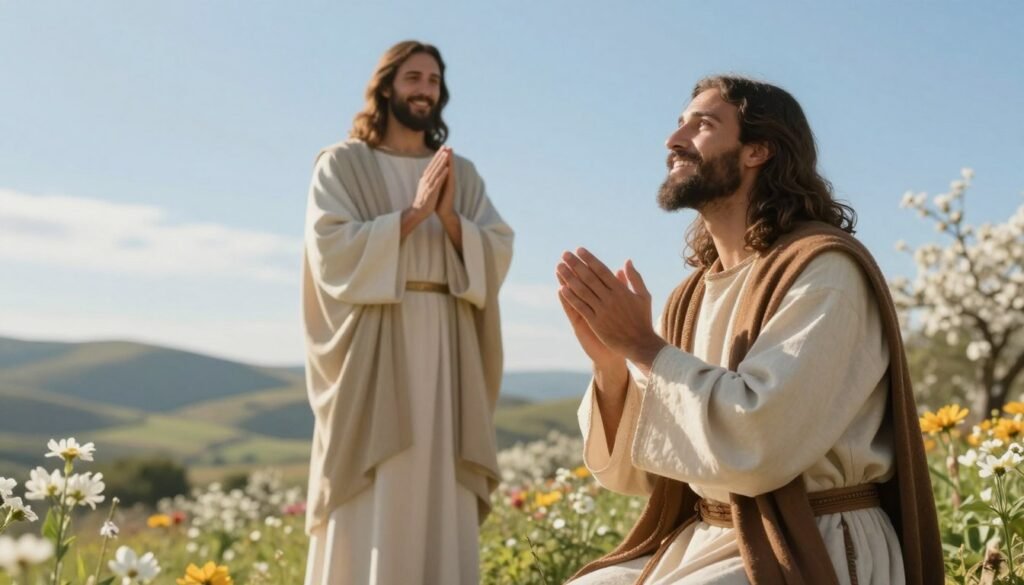
Ask yourself to name three blessings in your own life without treating gratitude as a contest.
Praise in Chains: A Sacrifice of Praise at Midnight
Paul and Silas prayed and sang to God at midnight while they were in prison. Their praise came before their circumstances changed, which makes the scene a picture of worship under pressure. Midnight was not a neat metaphor for them; they were in a cell, and other prisoners could hear.
A sacrifice of praise is a willing confession of God through Jesus, not a command to deny pain. Hebrews 13:15 describes continual praise offered to God through Jesus as “the fruit of lips that openly profess his name.” Continual does not mean constant singing or a fixed mood. It means praise can remain part of worship across changing days.
Hebrews Calls Praise a Continual Offering
Hebrews connects praise with speaking openly about God’s name. The phrase “sacrifice of praise” describes words offered when praise takes effort, not just when your heart feels light. Through Jesus, worshippers can confess faith without pretending that grief, fear, or anger has disappeared.
That distinction matters. Praise is not a trick for forcing a feeling, and God is not a vending machine that dispenses easy outcomes after the right song. A sincere prayer may include both trust and a plain account of what hurts.
Acts Shows Praise Before Circumstances Change
In Acts 16, Paul and Silas prayed and sang praises at midnight while the other prisoners listened. Then an earthquake shook the prison foundations, opened every door, and loosened everyone’s bonds. The story turns quickly from a song in a cell to a crisis for the jailer.
The jailer asked how to be saved. Paul and Silas told him to believe in the Lord Jesus Christ. That night, the jailer washed their wounds, and he and his household were baptized.
Hebrews 13:15’s call to continual praise does not make the earthquake a promise for every person who prays. The Acts story shows what happened that night, not a rule that every hard situation will end with a dramatic rescue. Praise can express faith while the outcome remains unknown, and that takes courage without requiring a soundtrack. Present praise as a choice of faith, not a bargain for a particular outcome.
Finding Reasons for Gratitude in Hard Times
Being thankful in hard times does not require calling the hard thing good. Grief, anger, and unanswered questions are honest parts of hardship, not signs that your faith has failed. Sorrow and gratitude can share space in one heart.
Gratitude can exist alongside pain, rather than taking its place. No one needs to thank God for harm itself. A person can name what is wrong and still look for one true reason to hope, even when the day feels long.
Gratitude Does Not Deny Pain
Some days, the most truthful prayer is, “This hurts, and I need help.” That sentence does not shut God out. It names the life you are living, rather than acting as if the life you wish for has already arrived.
The phrase “love endures forever” can sound hard to hear when love and loss sit close together. It does not say that loss is small or that you should feel glad about it. It points to God’s love as something stronger than the moment that is hurting you.
Biblical Hope Gives Thanks Somewhere to Stand
Romans 8:28 offers hope that God works for good for those who love him, without calling every event good. Second Corinthians 12:9 points to grace that is enough in weakness. These words give people a place to stand when strength feels thin.
Romans 8:37-39 says nothing can separate God’s people from his love. Romans 8:26 says the Spirit helps in weakness, including when words fail. First Peter 1:6-7 describes faith refined through trials, while allowing room for grief during them.
These passages offer reasons for gratitude through God’s presence, help, love, and sustaining grace. They do not ask you to deny pain, and they do not promise that every question will get a quick answer. The phrase love endures forever can steady a heart without silencing it.
When you cannot find a long list of reasons, one may be enough. God’s faithfulness does not depend on your ability to feel strong or speak neatly. Let one true reason for hope sit beside the pain, without asking it to erase the pain.
Giving Thanks in Every Circumstance, Not for Every Circumstance
First Thessalonians 5:18 calls for gratitude in every circumstance, not gratitude for every circumstance. The word “in” describes where people practice giving thanks; it does not require calling every event good. That difference lets thankfulness be honest.
Christians can give thanks while facing hardship without giving thanks for the harm itself. A person may thank God for a friend’s support during a hard week and still grieve the reason that support was needed. Colossians 3:15 also tells Christians to be thankful, without asking them to deny what hurts.
| Focus | What it means | Example |
|---|---|---|
| Wording | Give thanks in the circumstance | “God, thank you for my neighbor’s help while I recover.” |
| Reason | Give thanks for a circumstance | “I am glad the rain filled my garden’s water barrel.” |
| Harm | Do not call harm good | “The job loss hurts; I am grateful my sister listened.” |
The first and third rows show how gratitude can remain truthful during pain. The second names a welcome event itself. Those are different kinds of thanks, and mixing them up can make a hard moment feel even lonelier.
A Psalm 100:4 prayer can include both a sign of care and a struggle you cannot fix today: “God, thank you for my friend’s call. I feel afraid about the test results, and I need your help. I praise you for staying faithful, even while I wait.” The words do not claim the fear is gone. They let thanks and need appear in the same prayer.
Some days, the thanks may be brief: “I am grateful someone brought dinner.” On another day, it may be a fuller prayer. Either way, giving thanks is an act of worship, not a demand to feel cheerful on schedule. A truthful prayer can hold both a real hurt and a real reason for thanks.
Putting Psalm 100 Into Everyday Practice
A practical lesson from Psalm 100 is to carry gratitude into ordinary work, not save it for a special service. A routine task can become a moment of worship when you do it with care. Even chores can be part of a faithful life, though the laundry basket may object to its new spiritual status.
Choose one ordinary moment today and use it to practice deliberate thanks. It might be making coffee, driving to work, or setting out food. A pause does not need to turn a task into a grand event; it can simply turn your attention toward God.
Practice Gratitude in Ordinary Moments
Colossians 3:23 tells Christians to work heartily as for the Lord. That can shape the way you answer an email, care for a child, or finish a shift. Service with gladness is not always loud joy; sometimes it is doing the next small thing with patience.
Second Corinthians 9:15 calls God’s gift “indescribable.” That word gives worship a reason beyond the mood of the moment. When routine work feels dull, I can remember that worship is about the one I serve, not about making every chore seem exciting.
Let Thanks Become Shared Worship
Gratitude can also be shared with other people through prayer, words, music, and mutual care. A church gathering may give people room to praise together, while each person brings a different week into the room. Nobody has to sing or feel the same way to belong.
Psalm 100:4 prayer points can stay simple: give thanks for God’s care, praise his character, and bless his name through words of trust. Shared worship may include a song, a spoken prayer, or quiet attention. An Assemblies of God position paper on worship describes gathered worship through Scripture, music, prayer, testimonies, and mutual encouragement.
That range matters because a room full of people will never carry one identical feeling. One person may sing; another may listen quietly; someone else may be glad to sit among friends. A church can make space for those different ways to worship together.
Let gratitude enter ordinary work, and let shared worship make room for people who feel differently.
The next time you wash a cup, answer a message, or walk to the car, pause for one breath. Choose one ordinary moment today as a deliberate act of thanks.
Conclusion
Gratitude is not a test of whether your life feels easy; it is a way to turn honestly toward God. Thankfulness can make room for sorrow without letting sorrow speak for every part of your life. A small act of trust may be enough for today.
You do not need a perfect mood or polished words to honor God’s name. Start with what is true, and let love shape the way you speak. Set aside five minutes this week to read Psalm 100 aloud with someone you trust.