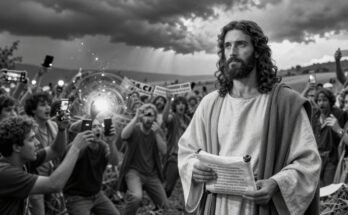

I checked my phone for good news and found none; worship before the victory can feel like waiting beside a silent screen. A sacrifice of praise is thanksgiving offered to God even when hardship makes gratitude difficult.
Psalm 18:3 says, “I will call upon the LORD, who is worthy to be praised: so shall I be saved from mine enemies.” That verse does not ask us to pretend every situation feels safe. It gives us words to turn toward God when the day still feels uncertain.
Sometimes the hardest time to praise comes before anything changes. People can feel fear, hope, and tiredness in the same breath; faith does not erase those feelings or promise an easy life.
These Bible stories show praise alongside danger, pain, and questions about what comes next. They do not make every problem disappear on cue, like a sitcom ending with a neat little bow.
Key Takeaways
- Praise can be honest without sounding cheerful.
- Faith can name fear instead of hiding it.
- Worship expresses trust, not control over God.
- Support and practical action can sit beside prayer.
- Start with one true sentence, not a perfect speech.
First, let’s look at how Jehoshaphat faced a threat without pretending it was small.
How Did Jehoshaphat Face Judah’s Overwhelming Threat?
Jehoshaphat did not deny the threat; he brought the danger and his helplessness before God. His faith faced the real battle, rather than painting over it with cheerful words.
In 2 Chronicles 20:1–12, a coalition from Ammon, Moab, and Mount Seir advanced against Judah. Jehoshaphat called a fast and gathered the people to seek God.
Faith can name a real danger and admit, “I do not know what to do.”
The king’s prayer did not hide behind grand talk. He recalled God’s power and asked for help, while the people stood together before God.
A coalition Judah could not ignore
This was not a vague worry about what might happen someday. The forces were moving toward Judah, and the king knew the danger could bring defeat.
No clever plan made the risk vanish. No action-movie hero casually fixes everything before the priests finish their coffee.
In the wilderness of fear, naming the threat matters. It lets prayer speak to what’s actually happening, not to a softer version we wish were true.
An honest prayer that names helplessness
Jehoshaphat said Judah had no power against the threat. He admitted, “We do not know what to do,” then fixed his eyes on God.
That admission was not a failure of faith. It was an honest prayer, spoken in public, by a leader who could not solve the problem through willpower alone.
His example gives us three clear moves:
- Name the danger.
- Admit the limits.
- Direct attention to God.
Confusing faith with denial is a mistake. Denial says the danger is not real; faith can say the danger is real, and God still matters.
Jehoshaphat’s honest prayer prepared Judah to hear Jahaziel’s message, which shaped the people’s response when the battle came.
How Does Worship Before the Victory Shape the Battle?
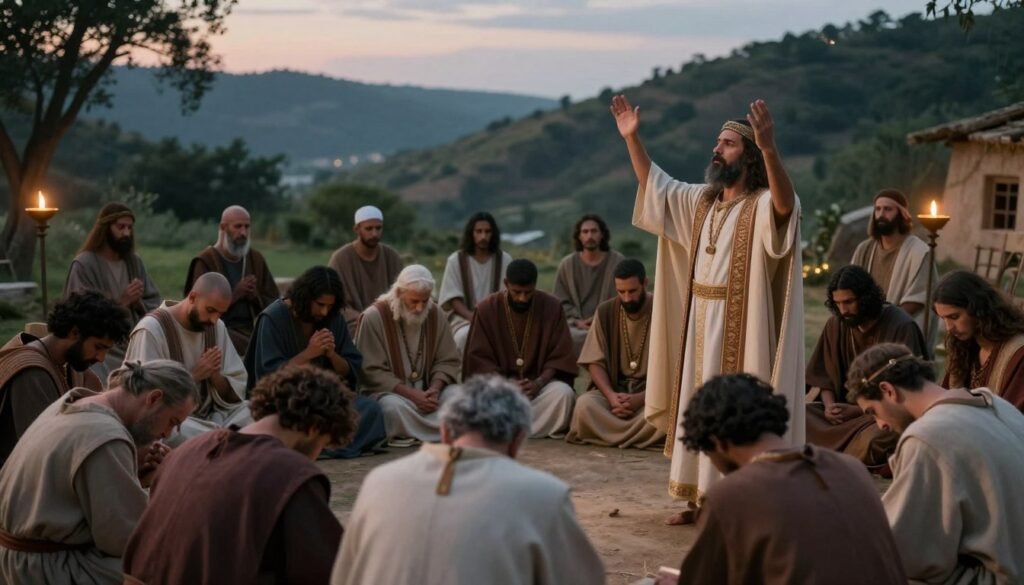
Singers went ahead of Judah’s army, praising God before anyone could see the outcome. Their worship answered God’s message, not a plan to force a quick victory.
In 2 Chronicles 20:14–22, the Spirit of the Lord spoke through Jahaziel. He told Judah that the battle belonged to God and called the people to stand firm.
Judah still had to take its position and face what lay ahead. That detail matters: trusting God did not mean the people could skip the hard part or act as if danger had vanished.
Jahaziel’s message changes Judah’s posture.
Jahaziel told the people not to be afraid, because God would deliver them. He did not give them a trick for controlling God or a promise they could apply to every crisis.
The message changed where Judah looked. Instead of treating its own strength as the only answer, the people could trust God while taking their place.
Jehoshaphat bowed, and Judah worshiped. The priests and people responded together, with some falling before God and others standing in praise.
Singers lead before the outcome is visible.
Jehoshaphat appointed singers to go ahead of the army. They praised God’s holiness and gave thanks for God’s enduring love.
Their words praised God before the result was visible. They did not sing because they had already seen victory; they sang because they trusted God’s name and character.
As the singing and praise began, God set ambushes against the invading forces. The forces were defeated, as this biblical account describes God’s action.
That account says to praise god in the middle of danger, but it does not make praising God a button we press. Praise is not a weapon for manipulating God into giving us the result we want.
Worship can steady the spirit and help people act with trust. It does not guarantee that a problem will end on our preferred day or in our preferred way.

From that public battlefield, the story moves to a prison where Paul and Silas praised before anyone knew what came next.
What Do Paul and Silas and the Valley of Berachah Show About Praise?
A midnight prison cell was dark and close; Judah later gathered in the Valley of Berachah, the Valley of Blessing. These different places show praise in pain and praise after deliverance.
Acts 16:25 says Paul and Silas prayed and sang hymns at midnight while other prisoners listened. Their praise came after beatings, confinement, and stocks, not after an easy day.
An earthquake shook the prison, opened its doors, and loosened the prisoners’ chains. The jailer and his household were baptized, a story of salvation that reached beyond the two men.
The other prisoners heard their words and songs before the earthquake came. Their praise gave people nearby a witness to faith, even while the men remained locked up.
The earthquake is not a promise that every hardship ends with an instant release. Some people pray with raised hands and still face a long wait; their pain does not mean they lack faith or joy.
Judah’s story ended differently. In 2 Chronicles 20:26, the people gathered at the Valley of Berachah and praised God there.
The name Berachah means “blessing.” Judah’s place of praise followed a battle, while the prison story includes a sudden earthquake and a new response from the jailer’s household.
Both accounts give God glory, but they do not offer one pattern for every life. Praise can be heard by people around us before our situation changes.
These stories leave room for honest fear and real hardship. Now we can consider ways to praise without pretending that our own situation is easy.
How Can You Praise God Before Your Circumstances Change?
While waiting for hard news, you can offer one honest sentence instead of forcing a cheerful speech. “God, stay with me” can be a real start, even when you feel nothing like a choir soloist.
Praise and prayer can share the same moment. Psalm 34:1 calls people to bless the Lord at all times, while Hebrews 13:15 describes continual praise as a sacrifice and thanks from our lips.
Praise expresses love and trust, not a tool to make God grant a certain outcome.
That sacrifice may feel costly when grief, fear, or a long wait fills the room. You do not need to deny those feelings before you speak a word of thanks.
Worship expresses love, devotion, and reverence toward God. It is not a deal where you give enough praise and receive a specific healing, check, or timeline.
Start with God’s character, not a guaranteed outcome
Choose one attribute of God to focus on, such as mercy, care, or faithfulness. Then let that focus shape your words without pretending you know what happens next.
Second Corinthians 5:7 says believers walk by faith, not by sight. That does not mean ignoring facts; it means trusting God when the way ahead is not clear.
You might say, “God, I am scared, and I believe you are near.” The word “and” can hold both truths without making either one disappear.
Let prayer and praise share the room.
A prayer can ask for help, while praise names something true about God. They do not compete for space, like two people reaching for the same tiny chair.
Try these five steps when you need a simple way to begin:
- Name what is hard.
- Choose one attribute of God to focus on.
- Use a short Scripture or honest sentence of thanks.
- Ask a trusted person for support.
- Take one responsible next step.
You can keep the words plain. Psalm 34:1 does not require polished speech, and Hebrews 13:15 points to thanks given through the lips we actually have.
Take one faithful next step.
A next step should fit the facts in front of you. Prayer does not replace a doctor’s care, a needed phone call, or help from someone you trust.
Second Corinthians 5:7 offers a way to live without sight of the whole path. Faith can include asking questions, seeking support, and doing the next responsible thing.
Use these lines as a starting point, not a script you must perform:
| Moment: A | A truthful praise or prayer line A | A grounded next step |
|---|---|---|
| Fear before an uncertain conversation | God, give me courage and help me speak honestly | Write down the one thing you need to say |
| A long season of grief | God, stay near me today | Tell someone you trust that today is hard |
| No words come easily | God, I’m here; help me | Sit quietly, or ask someone to pray with you |
Praise is not denial, and asking for practical or personal support is not a failure of faith. If no words come, silence can be honest; you can also ask someone to pray beside you.
Choose one small step from this list, or use a line from the table that fits your day. The goal is not to sound impressive; it is to turn toward God as you are.
A single sentence is enough for today. Let it be honest, and let support be part of the next step rather than a sign of failure.
Conclusion
You do not need to feel fearless before you turn toward God. Faith can name fear honestly, and praise can express trust without trying to control God.
When victory feels far away, one true sentence still matters. Choose a Scripture or a sentence of thanks today, then share it with someone you trust if support would help.
The importance of praise is not measured by how quickly life changes. Let your words be small enough to say, even on a day when joy feels distant.
May that one act of worship bring steadiness to your service, your choices, and the times ahead. I invite you to practice one small praise today, without predicting when circumstances will change.