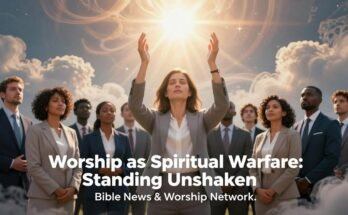

We’re all racing towards madness together. Our to-do lists are endless, and our minds are overwhelmed. Even Pope Francis has called out our non-stop work culture, urging us to learn to take a break.
We’ve been told our worth is in how much we do. But stopping doesn’t mean we’re failing. Taking a counter-cultural sabbath is a bold statement of faith. It’s not laziness; it’s reclaiming your sanity in a world that demands too much.
Dealing with the burnout epidemic is more than a quick weekend away. It’s about setting biblical boundaries to safeguard your peace. By choosing Christian rest, you show you’re more than just a task-completing machine. Let’s explore how to stop the chaos and start living again.
Key Takeaways
- Recognizing that your productivity does not define your worth.
- Understanding why constant busyness is a modern trap.
- Learning to view intentional downtime as a spiritual necessity.
- Implementing healthy limits to protect your mental and emotional health.
- Embracing the idea that stopping is a bold, faith-filled choice.
The Modern Exhaustion Crisis
If you feel like your brain is a browser with 400 tabs open, you’re not alone. WeWe’reacing the exhaustion crisis: meeting the demands of a 24/7 digital hustle culture. ItIt’sxhausting just thinking about it.
Companies try to solve this by adding foosball tables or offering “unlimited “vacation time. But it’s like putting a band-aid on a broken leg. It looks good, but it doesn’t fix the real problem of too much work.
The 24/7 Digital Hustle Culture
We’ve been told that constant grinding is necessary to keep up. Our phones keep us tied to emails and Slack notifications even after work.
“The greatest threat to our future is our inability to disconnect from the noise of the present.” — Anonymous
This culture makes us think every notification is urgent. It makes us feel guilty for just existing without producing something.
The Psychological Toll of Constant Connectivity
The mental cost of this lifestyle is huge. Always being “on “means your brain never rests, which can lead to burnout.
We often tie our self-worth to our work output. This is a dangerous game. If not careful, wewe’llun out of energy while pretending to have it all together.
| Feature | Hustle Culture | Sustainable Living |
|---|---|---|
| Primary Goal | Maximum Output | Meaningful Impact |
| View of Rest | A Weakness | A Necessity |
| Connectivity | Constant | Intentional |
| Success Metric | Busyness | Well-being |
In the end, the exhaustion crisis: meeting the demands of a 24/7 digital hustle culture is unsustainable. It’s time to take back our peace and stop letting devices define our worth.
The Secular Cry for Rest
We’ll be running on empty, but we pretend it’s cool. Exhaustion is seen as a sign of strength, but we know it’s not true. This is the secular cry for rest: analyzing modern movements like “s”abbat 250.”
Even top business leaders are now seeing the harm of working too much. WeWe’reitting a wall, and the world is looking for a way out.
Analyzing Modern Movements Like Shabbat 250
The “S”abbat 250” “ovement is about taking a break from screens. ItIt’sot just about putting your phone away. It’s about taking back your sanity from constant alerts.
These movements are popular because they give us a way to say “no “to endless work. By setting a time to stop, people find they’re not just resting. They’re reclaiming their humanity.
Why the World Is Searching for Permission to Stop
The need for a break is not new; itit’sssential. Cultures worldwide have always known this, like the indigenous principle of “Buen Vivir” and “Noma y’y’Ikiruhuko. These traditions show that true success is about community, not just personal achievement. We want to stop because we know we’re not machines.
| Philosophy | Core Focus | Goal |
|---|---|---|
| Hustle Culture | Infinite Output | Constant Growth |
| Shabbat 250 | Intentional Pause | Mental Clarity |
| Buen Vivir | Communal Harmony | Sustainable Life |
| Ngoma y’y’Ikiruhuko | Collective Rest | Soul Restoration |
Defining Rest as a Spiritual Discipline
Many think rest is earned after a long week. But this is a lie from the productivity gods. We see downtime as a reward, one we only deserve after exhausting ourselves. Yet, biblical rest isn’t a luxury you earn; it’s a spiritual discipline of trust.
Moving Beyond Rest as a Luxury
Seeing rest as a luxury turns it into another task. You try to make your weekends as productive as weekdays. This misses the point, as it ties your value to what you do.
True rest means letting go of the need to prove your worth—it’s not about recharging to work again. It’s about recognizing you’re a person, not just a doer. You dodon’teed to qualify for peace.
Trust as the Foundation of Biblical Sabbath
The Sabbath is based on radical faith. By stopping work, you show the world and yourself that it will keep going without you. It’s a sign that God, not your emails, is the provider.
This change from earning to trusting changes how you see your days off. Instead of seeing them as weak, you see them as holy necessities. Here’s how these views compare:
| Feature | The Earning Mindset | The Trusting Mindset |
|---|---|---|
| Primary Goal | Productivity | Presence |
| View of Rest | A reward for labor | A spiritual discipline |
| Source of Worth | External achievements | Internal identity in God |
| Outcome | Burnout | Divine freedom |
So, biblical rest isn’t a luxury you earn; it’s a spiritual discipline of trust. By stepping away, you show you believe in yourself, even when you’re not doing anything.
The Sabbath Was Made for You
Jesus once shared a truth that changes how we see rest. We often turn something meant for our good into a test. It’s like we can’t stand the idea of doing nothing without feeling guilty.

Deconstructing Mark 2:27
Remember when Jesus said the Sabbath was made for man, not the other way around? In Mark 2:27, he told the strict Sabbath followers. The Sabbath was made for you (Mark 2:27), which means it’s a gift, not a rule.
The Sabbath was made for man, not man for the Sabbath.
We see the Sabbath as a rule we might break if we relax too much. But it’s really a divine invitation to pause and breathe.
Moving from Legalistic Rules to Divine Freedom
Changing from a rule-following mindset to one of rest is transformative. We are moving from legalistic rules to divine freedom, which is tough for those of us who love to be busy. Jesus offered the weary a chance to share his load, promising it would be easy and light.Let’s compare two ways of thinking:
- Legalistic Approach: Focusing on what you can’t do, counting minutes, and feeling anxious about breaking the day.
- Divine Freedom: Focusing on who you are, resting in that, trusting that the world won’t fall apart if you take a break, and enjoying your life.
You deserve the rest your weary soul needs. It’s time to see your day off as a chance to be human, not a test to pass.
The Bondage of Hyper-Productivity
Do you feel like you’re running on a never-ending wheel? You’re not alone in this feeling. We’ve made our worth about how much we produce. This is a tiring way to live.
It’s interesting to see how hyper-productivity became a modern form of bondage. It makes us keep going until we can’t anymore.
How We Became Slaves to Our Own Output
We treat our calendars like they’re sacred. We think we must always be busy. This has turned our lives into endless tasks.
We work hard to prove we’re doing enough. But we have more technology to save time. Yet, we have less time than ever. We’re slaves to our output, always looking for the next thing to do.
The Myth of Self-Worth Through Achievement
We believe our worth comes from our achievements. We chase milestones like they’re trophies. But this chase leaves us feeling empty.
Who are we without our jobs and side hustles? We might find a person worth knowing. It’s time to stop hustling and see our true value.
| Feature | Productivity Mindset | Restful Mindset |
|---|---|---|
| Primary Goal | Constant Output | Soul Alignment |
| Self-Worth | Based on Achievement | Based on Identity |
| View of Time | A Resource to Exploit | A Gift to Steward |
| Result | Burnout | Peace |
Rest as Spiritual Warfare
In today’s world, stopping work feels like a betrayal. We’re taught our worth is in what we do, making rest as spiritual warfare seem both bold and scary.
When you stop working, you’re not being lazy. You’re fighting against a culture that wants you to work until you’re exhausted. It’s a quiet fight against the idea that your value comes from your last project.
Why Stopping Work Is a Counter-Cultural Act
Everyone around you is racing to meet deadlines, fueled by coffee and stress. By saying “no” to the constant demands, you’re disrupting the hustle machine. It shows that your worth isn’t in spreadsheets or promotions.
“The Sabbath is a sanctuary in time, a place where we stop the frantic pace of life to remember who we really are.”
This isn’t just about taking a nap. It’s about reclaiming your humanity. By refusing to be a slave to your work, you prove you’re more than just a machine. You’re a person made for more than just tasks.
Declaring God as Your Ultimate Provider
Why stopping work is a declaration that God is your ultimate provider is a test of faith. If you think your job is the only thing keeping you afloat, you’ll never stop working. You’ll always seek the next thing to secure your future.
But when you stop working, you’re making a bold statement. You’re saying your security comes from something greater than your salary. It’s a radical act of trust that says, “I trust God to take care of me, not just my job.”
The Lesson of the Manna
Imagine walking through a desert with no food in sight. The Israelites faced this every day, waiting for their next meal. They learned the lesson of the manna: overcoming a scarcity mindset by eating what they found each morning.
Overcoming a Scarcity Mindset
We often act like we’re preparing for a long famine. This scarcity mindset makes us think we must always work. It tells us to keep checking emails, even when we’re tired.
The Israelites found out hoarding was bad. Saving extra manna turned into a mess. Trusting that you have enough for today helps you relax and stop checking your phone.
Learning to Trust in Daily Provision
Trusting in daily provision is not laziness. It’s knowing you’re not in charge of everything. When you stop trying to control everything, you can finally breathe.
This view changes how you see your free time. Instead of seeing it as a luxury, you see it as a divine gift. You’re saying God’s grace is enough, even when you’re not working.
| Feature | Hustle Mindset | Manna Mindset |
|---|---|---|
| Primary Goal | Infinite Accumulation | Daily Sufficiency |
| View of Rest | A Waste of Time | A Spiritual Necessity |
| Source of Security | Personal Output | Divine Provision |
| Emotional State | Constant Anxiety | Deep Contentment |
By embracing the lesson of the manna: overcoming a scarcity mindset, you can stop trying to prove yourself. You can drop the heavy burden of always having to be self-reliant. If the desert wanderers could survive on daily bread, you can too.
The Burnout Epidemic and the Need for Counter-Cultural Sabbath
Feeling like a smartphone battery stuck at 2% for years? You’re not alone. We’ve made being busy seem important, and it’s draining. The burnout epidemic has made our lives a never-ending cycle, forgetting why we started.

Recognizing the Signs of Spiritual and Physical Depletion
It begins with feeling physically drained, then it hits your soul. You might find your patience as thin as a budget phone screen. Feeling numb in moments that should be joyful is a sign. Losing your purpose means you’re running on empty.
This feeling shows when you stop caring about things that once excited you. Relationships become tasks, not gifts. If you’re always running at full speed, it’s time to admit you’re not invincible.
Why the Church Must Lead the Way in Rest
The world values productivity, but the Church teaches each of us to stop. We need to promote a counter-cultural sabbath that shows our worth isn’t in what we do. If not us, then who?
We must stop pretending to be superhuman. By embracing rest, we show we trust God more than our tasks. It’s time to make rest a bold statement of faith.
| Feature | Hustle Culture | Sabbath Rhythm |
|---|---|---|
| Primary Goal | Infinite Output | Divine Connection |
| View of Rest | A Weakness | A Necessity |
| Core Identity | What You Do | Who You Are |
| End Result | Total Burnout | Soul Renewal |
Entering the Supernatural Sanctuary
If your idea of a sanctuary is hiding in the bathroom for a few minutes, we need to talk. We often see rest as a reward after exhausting ourselves. But there’s a deeper, divine reality waiting for us.
Reflecting on Hebrews 4:9-10
The writer of Hebrews shares a profound truth. They say a Sabbath rest is for God’s people. It’s not just about taking a nap or turning off your phone. It’s about entering the supernatural sanctuary (hHebrews4:9-10), a place where the world’s chaos can’t reach you.
When you stop trying to prove yourself, you enter God’s intended rhythm. It’s a shift from “doing” to “being.” You tell your soul it’s safe to stop fighting because you’re already held.
Jesus Christ as the Ultimate Fulfillment of Our Rest
We try to find peace through productivity, but it’s futile. True peace comes when we see Jesus Christ as the ultimate fulfillment of our rest. He finished the work of salvation, so we don’t have to keep striving.
Think of it as the ultimate weight lifted off your shoulders. You no longer need to perform for approval or hustle for significance. Resting in Him, you find a steady home in God’s presence, even when life is chaotic.
Ceasing from Self-Reliance
If you’re like me, you might hold onto control like it’s a shield. We keep our schedules and plans tight, fearing the world will fall apart without us. It’s tiring, right?
But ceasing from self-reliance to rely on the infilling of the holy ghost is a big change. It means we stop thinking we control everything. This is actually a huge relief once we accept it.
The Difficulty of Letting Go of Control
Letting go of control is incredibly hard. We think we must be in charge because we fear chaos. But our constant need to control is actually a trap.
This need for control stops us from finding true rest. Always looking for problems, we miss out on enjoying life. It’s time to realize our control isn’t what keeps the world going.
Relying on the Infilling of the Holy Ghost
Instead of using up our own energy, we can tap into a deeper source. Ceasing self-reliance and relying on the infilling of the Holy Ghost means switching from burnout to divine strength. It’s like switching from a small battery to a huge power grid.
When we stop trying to save ourselves, we make room for something greater. This isn’t laziness; it’s becoming spiritually efficient. We learn to flow with grace, not fight against it.
| Feature | Self-Reliance | Divine Reliance |
|---|---|---|
| Energy Source | Limited Human Effort | Infilling of the Holy Ghost |
| Primary Emotion | Constant Anxiety | Deep Inner Peace |
| Outcome | Burnout and Fatigue | Sustainable Growth |
| Control Level | Illusion of Control | Trust in God’s Sovereignty |
Establishing Biblical Boundaries
If you think you can keep inner peace by saying “yes” to every request, think again. Our time is not a public park for everyone to dump their emotional trash. Biblical boundaries are essential; they protect your soul from the chaos of modern life.
Protecting Your Peace in a Noisy World
The world is loud and always wants your attention. If you don’t learn to filter the noise, you’ll burn out. True peace comes from being intentional about what you let into your mind and spirit.
Setting biblical boundaries means you’re not the savior of the world. You can turn off your phone, ignore emails, and just be quiet. Protecting your peace is not selfish; it’s being a good steward of your life.
The Courage to Say No to Good Things
Here’s the hard truth: you can’t do everything that’s “good.” The real challenge is saying “no” to good things so you can say “yes” to the best things. It takes courage to disappoint someone now to keep your health later.
We often fear that saying “no” makes us seem unspiritual or lazy. But biblical boundaries show maturity and deep faith. By not trying to be everything to everyone, you make room for God to be everything to you. It’s time to draw lines in the sand for your schedule and soul’s sake.
The Theology of Enough
You’re not a startup, so why try to endlessly scale your life? Our culture treats “more” as a goal, but “enough” is truly powerful.
We’re told we must grow or die. This cycle is tiring, making us feel we’re always falling behind in a race without an end.
Rejecting the Infinite Growth Model
The infinite growth model works for quarterly reports, but it’s terrible for living. Treating your soul like a business asset will leave you drained.
You were made for rhythms, not just endless work. Trying to force infinite productivity from a limited body leads to burnout.
Stop judging your worth by your tasks. True freedom comes when you see you don’t need to conquer the world to be worth something.
Finding Contentment in God’s Design
Contentment is a bold statement against a world that keeps you wanting more. It’s knowing you’re enough because the Creator loves you.
When you embrace God’s plan, you stop chasing every new goal as if it’s life-saving. You realize your value is fixed, not changing with every promotion or like on social media.
“Contentment is not the fulfillment of what you want, but the realization of how much you already have.”
Finding peace in God’s design means you don’t have to be everything to everyone. You can finally relax, knowing your identity is secure, even when you’re not productive.
Practical Steps to Disconnect
Ever felt like your phone is buzzing even when it’s not? We’re always connected, making it hard to take practical steps to disconnect from digital distractions. Our devices often steal our quiet moments.
Creating Sacred Spaces in Your Home
Your home should be a peaceful place, not just another office. To protect your peace, make some areas tech-free. Think of these as “analog islands” in a digital world.
Make your bedroom a phone-free zone. Use a simple alarm clock instead of your phone. This helps your brain relax at night, away from screens.
Digital Detox Strategies for the Modern Believer
Setting holy boundaries is key in today’s fast-paced world. It’s not about being a loner; it’s about focusing on what’s important. Turn off alerts that make you anxious.
Try a “Sabbath hour” or a day without your phone. It might feel hard at first, but it’s essential. You’re teaching your soul to depend on God, not constant updates.
| Habit | The Digital Trap | The Healthy Alternative |
|---|---|---|
| Morning Routine | Checking emails immediately | Reading scripture or prayer |
| Bedroom Environment | Scrolling social media | Physical books or journaling |
| Meal Times | Watching videos while eating | Engaging in conversation |
| Free Time | Endless news feeds | Walking outside in nature |
Cultivating a Rhythm of Grace
Resting without feeling like a slacker is tough, like finding a parking spot at Costco. We think we must always be busy to succeed. It’s time to see rest as a rhythm of grace we practice every day.
Rest is like breathing. You don’t hold your breath until you finish a task. So, why do we treat our souls this way? We should breathe in God’s grace and release the day’s stress.
Moving from Guilt to Gratitude
The biggest obstacle to rest is that voice in your head. It tells you you’re not doing enough. This toxic productivity makes you feel that your worth is tied to your tasks.
We must switch from guilt to gratitude. Feel thankful for being enough, just as you are. The saying goes:
“Grace is not a reward for the righteous, but a gift for the weary.”
Gratitude makes rest a sacred pause. It shows you God is in control, not you. You’re allowed just to be.
Integrating Rest into Daily Life
To make rest a habit, you need strategy, not just good intentions. You don’t need a long retreat to find peace. Start with small, intentional moments in your day.
Here are ways to make rest part of your day:
- The Five-Minute Reset: Take five minutes every few hours to breathe or look out a window.
- The Evening Buffer: Stop work an hour before bed to relax, not work.
- Gratitude Journaling: Write down what you’re thankful for for two minutes. It quiets the critic that wants more work.
This isn’t about adding to your to-do list. It’s about protecting your peace so you can enjoy life. Start small, be kind to yourself, and let grace’s rhythm guide you.
The Long-Term Impact of Radical Faith
The world is all about the grind, but your soul craves something deeper. Stepping off the productivity treadmill is rebellious. It’s not just surviving the week; it’s building a lasting life.
Sustaining Your Soul for the Long Haul
Radical faith isn’t a quick sprint. It’s a marathon needing different fuel. This fuel can’t be found in just coffee or late nights. Resting is telling your soul it’s okay to breathe.
Think of rest as maintenance for your soul. Without it, you’ll crash on life’s highway. Consistency is key because a single break won’t undo years of burnout.
Witnessing to a Weary World Through Rest
Stressed people are frantic, irritable, and exhausting. Living differently makes you a living billboard for a better way.
Your peace stands out in a stressed world. It’s a powerful testimony in a culture seeking silence. By refusing chaos, you show a path to freedom without burnout.
You don’t need to preach to make an impact. Sometimes, just being still while the world spins is radical. That’s how you change the culture, one rested soul at a time.
Conclusion
We’ve explored the chaos of our non-stop lives together. Reaching this point feels like dropping a heavy backpack after a long journey.
Rest isn’t just a spa day or a quick weekend away. It’s a bold choice that grounds your soul in something greater than your tasks.
You’re not a machine made for endless work. You’re a human, made for rhythm, grace, and real sleep.
I hope you feel ready to set boundaries today. It might feel odd at first, but your sanity is worth it.
Stop racing in the productivity games. You’re allowed to shut down your laptop, turn off your phone, and just be. You don’t need to prove anything to the world.
Choosing to live like a human is a bold move in today’s world. Take a deep breath and start practicing stopping right now.